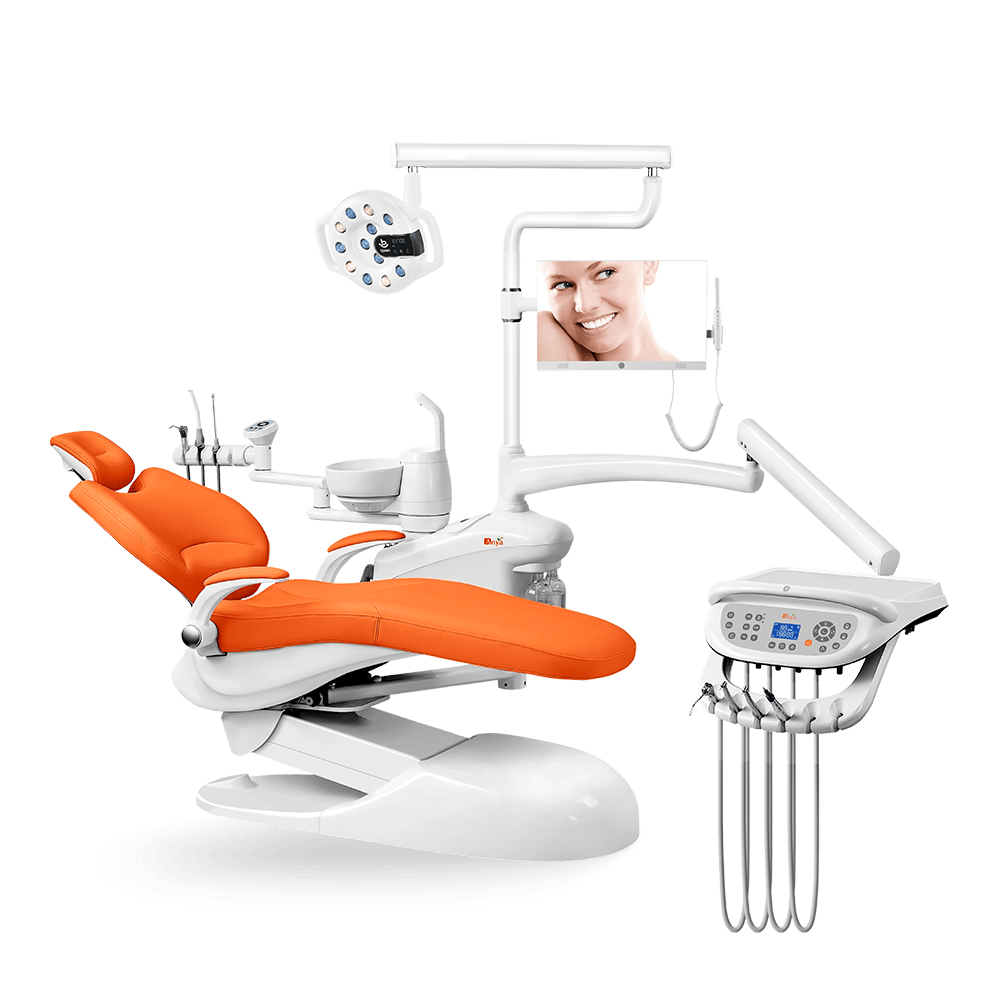
Electric and hydraulic dental chairs can both support clinical positioning, but they differ in actuation, controls, service requirements, installation, and troubleshooting. Buyers should compare the complete unit and the local support plan rather than choosing by technology label alone.
Compare the main decision areas
| Area | Electric system | Hydraulic system |
|---|---|---|
| Movement | Motor, controls, wiring, presets when supported, and electrical protection. | Pump, fluid circuit, cylinders, valves, controls, and leak checks. |
| Service | Electrical diagnosis, motor, control board, cables, and compatible parts. | Fluid circuit, seals, pump, valves, cylinders, and compatible parts. |
| Installation | Voltage, protection, grounding, cable route, and service access. | Power, hydraulic components, level, base, access, and service conditions. |
| Workflow | Response, control layout, movement range, noise, and repeated use. | Movement quality, stability, noise, maintenance, and repeated use. |
Ask for evidence under the same conditions
Request the model, configuration, load condition, movement test, noise measurement, installation requirements, and service documents. A comparison is weak when one supplier describes a complete configuration and another describes only an actuator or component.
Consider the support environment
For clinics and distributors, the availability of technicians, manuals, warranty, spare parts, training, and response channels may matter as much as the initial technology choice. Confirm what can be diagnosed locally and what requires factory support.
Questions before buying
- Which movement, load, stability, and noise tests apply to the quoted model?
- What voltage, utilities, floor, and room conditions are required?
- Which parts are expected to wear and how quickly can they be supplied?
- What is covered by warranty and what evidence is required for a claim?
- Which manuals and training are available to the local service team?
Complete the comparison with the stability guide, the technical support review, and the request for quotation.
For the purchasing step, compare the best dental chair guide and use the dental chair RFQ template to align configuration, documents, installation scope, spare parts, and support before requesting quotes.