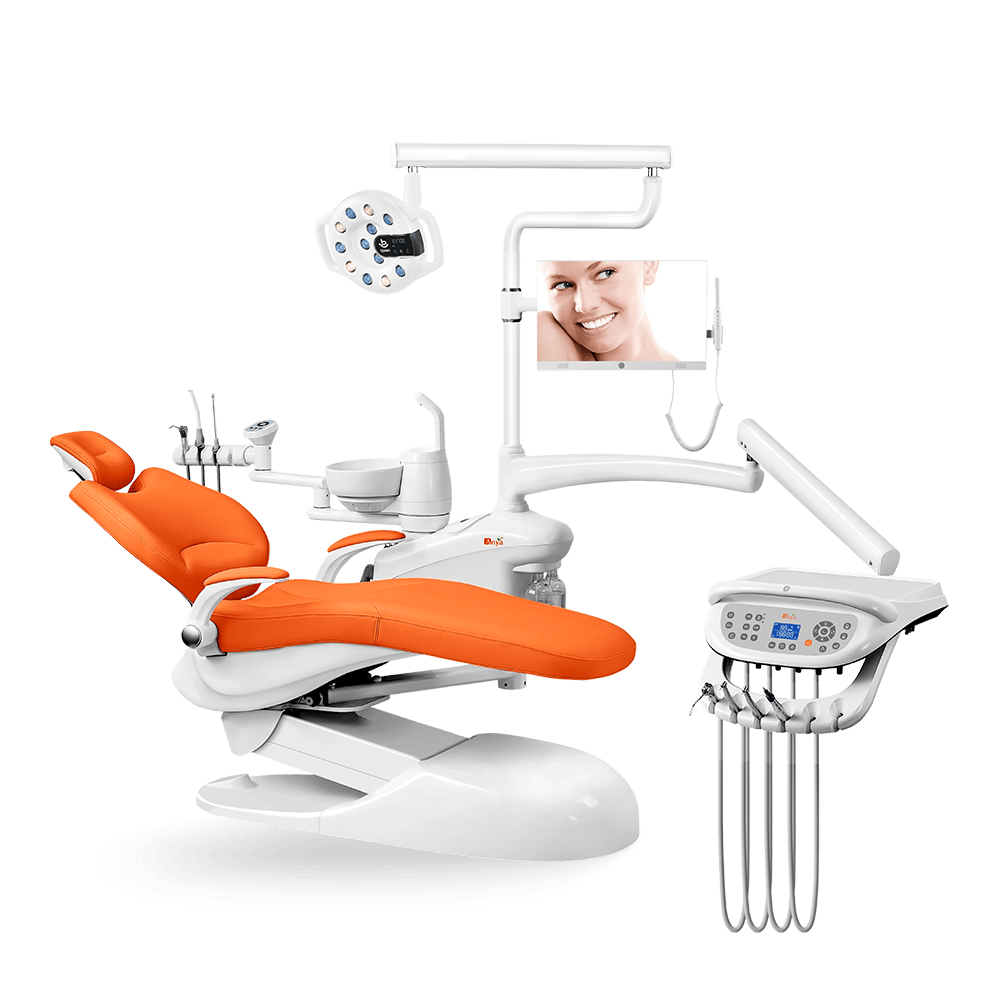
“Dental chair,” “dental unit,” and “treatment center” are often used as if they mean the same thing, but a buyer should read the actual configuration. The terms may describe different combinations of patient positioning, delivery, controls, light, assistant functions, spittoon, suction, and other equipment.
Use the specification, not only the label
| Term | What it may describe | What to confirm |
|---|---|---|
| Dental chair | Patient support, movement, base, backrest, headrest, and controls. | Whether delivery, light, suction, or assistant functions are included. |
| Dental unit | A chair combined with delivery, controls, light, spittoon, or auxiliary functions. | Exact included components, options, utilities, and service scope. |
| Treatment center | A broader integrated setup for the room or treatment workflow. | What is part of the center, what is separate, and who supports each part. |
Compare by clinical use
Start with general dentistry, hygiene, orthodontics, implantology, pediatric care, or a multipurpose room. Then define patient transfer, operator position, assistant access, instrument reach, cleaning, and service clearance. A wider configuration is not automatically better if the room or support plan cannot handle it.
Check room and ownership requirements
- Voltage, air, water, drainage, suction, lighting, network, and installation access.
- Dimensions, movement range, transfer side, operator reach, and cleaning clearance.
- Included and optional accessories, stools, lights, compressors, and suction.
- Warranty, manuals, training, spare parts, response time, and landed cost.
Questions for suppliers
- What exactly is included in the quoted configuration?
- Which parts are optional or supplied by another company?
- What room drawings and utility requirements are available?
- Who installs, trains, and supports the complete workflow?
After defining the term and use case, compare the types of dental units, review the buying guide, and send a structured request for quotation.
For the purchasing step, compare the best dental chair guide and use the dental chair RFQ template to align configuration, documents, installation scope, spare parts, and support before requesting quotes.