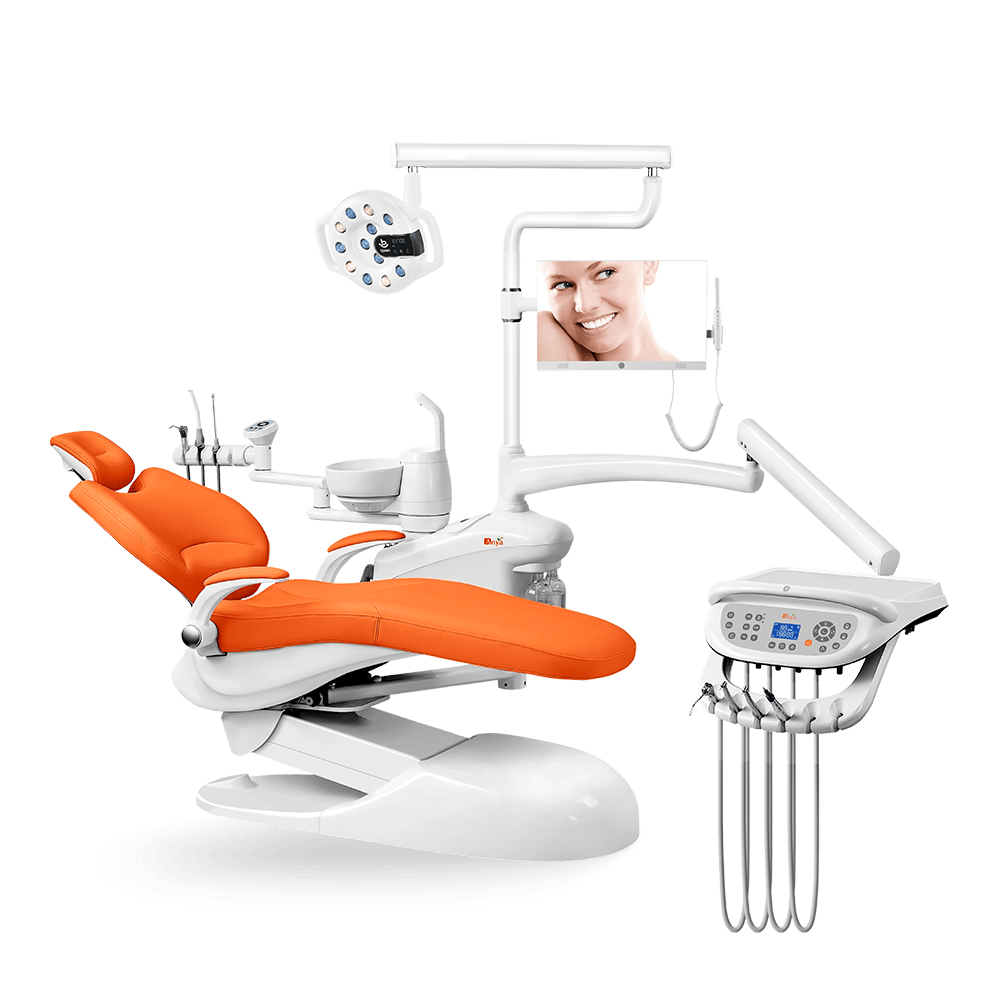
The evolution of the dental chair reflects changes in clinical workflow, infection-control expectations, operator access, patient positioning, and the need to integrate several devices around one treatment area. Buyers should study that evolution as a way to understand current configurations, not as a reason to accept unverified technology claims.
From basic seating to a treatment system
Earlier dental chairs focused on patient support and manual positioning. Modern units commonly combine powered movement, delivery systems, operating lights, assistant controls, spittoons, suction, and other accessories. The exact configuration differs by model and market, so a catalog image is not a substitute for a written specification.
Milestones that changed buyer expectations
| Development | What it changed | What to check today |
|---|---|---|
| Powered positioning | More repeatable height and backrest adjustment. | Movement range, controls, stability, noise, and service access. |
| Integrated delivery | More instruments and controls within the operator’s workflow. | Included items, optional items, tubing, cleaning, and replacement parts. |
| Assistant-side functions | Better coordination between dentist and assistant. | Reach, visibility, suction, controls, and room layout. |
| Digital connections | More devices can share information or operate near the chair. | Ports, compatibility, software responsibility, and technical support. |
| Service-focused design | Maintenance and replacement planning became part of ownership. | Manuals, access panels, spare parts, warranty, and escalation. |
How to evaluate a current configuration
Start with the clinical use, number of operators, patient movement needs, cleaning workflow, available utilities, and local service capability. Then compare the chair, delivery system, light, assistant unit, suction, compressor, controls, and accessories as one operating environment.
Avoid technology-led purchasing
Terms such as smart, AI, ergonomic, or advanced do not replace evidence. Ask what was tested, under which conditions, for which model, and what the buyer receives in manuals, training, warranty, and spare-parts support.
Use the history of the dental chair to ask better questions, then confirm the actual configuration through the buying guide, quality control review, and request for quotation.
For the purchasing step, compare the best dental chair guide and use the dental chair RFQ template to align configuration, documents, installation scope, spare parts, and support before requesting quotes.