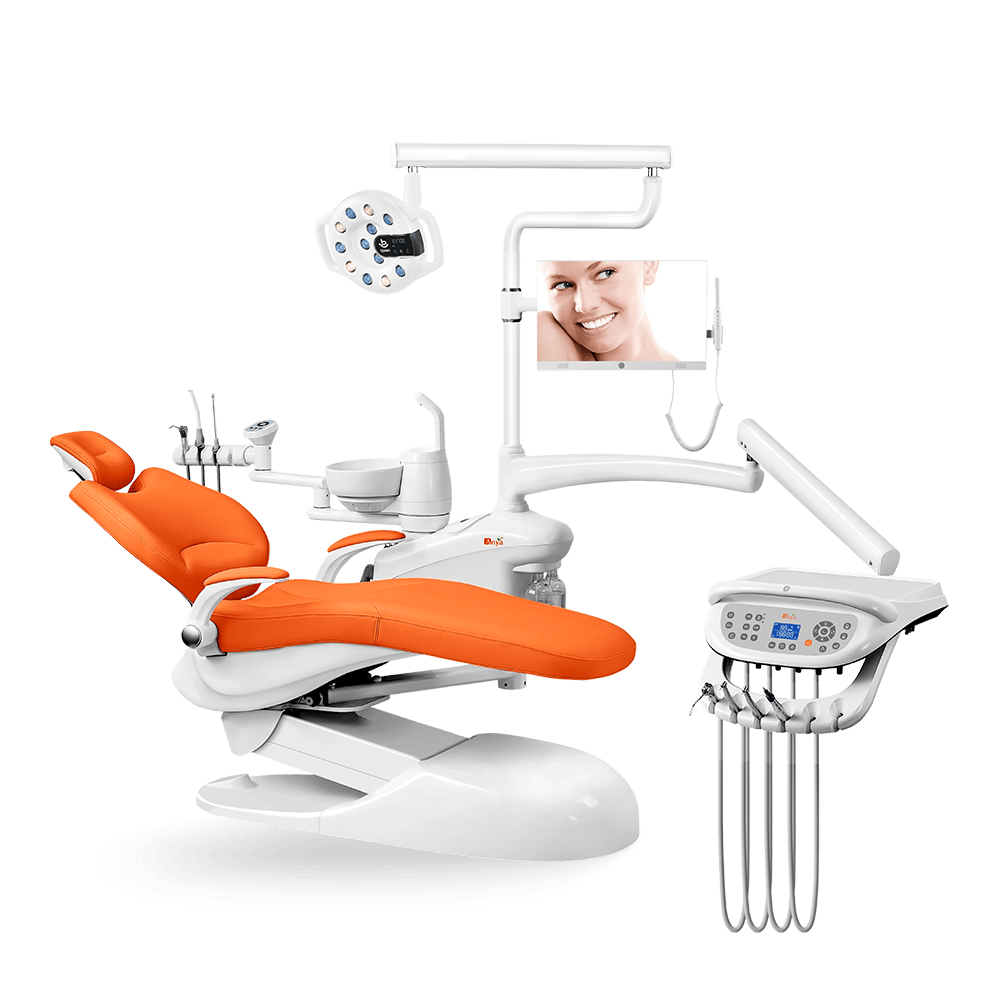
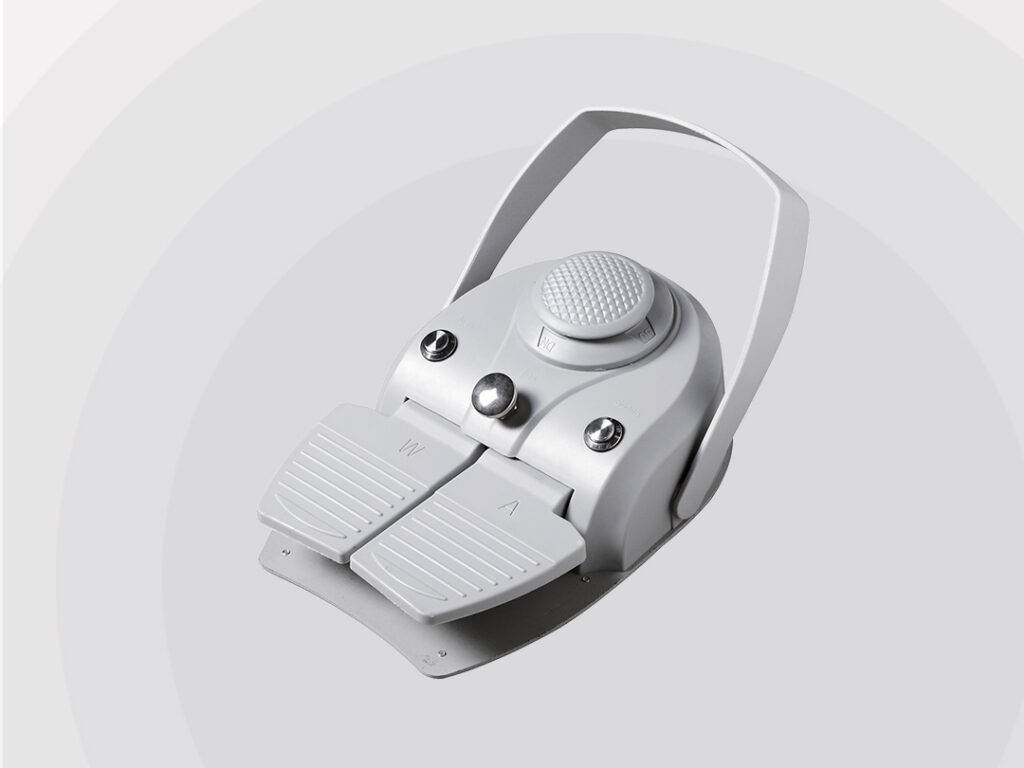
Dental chair foot control is one of the simplest ways to keep treatment hands free while the team stays in rhythm. The right setup can help the dentist keep both hands on the field, support posture, and reduce unnecessary movement around the chair. The wrong one can make the room feel clumsy even when the chair itself is good. Because foot control options vary by model and delivery system, buyers should confirm the exact configuration in writing before they approve the order.
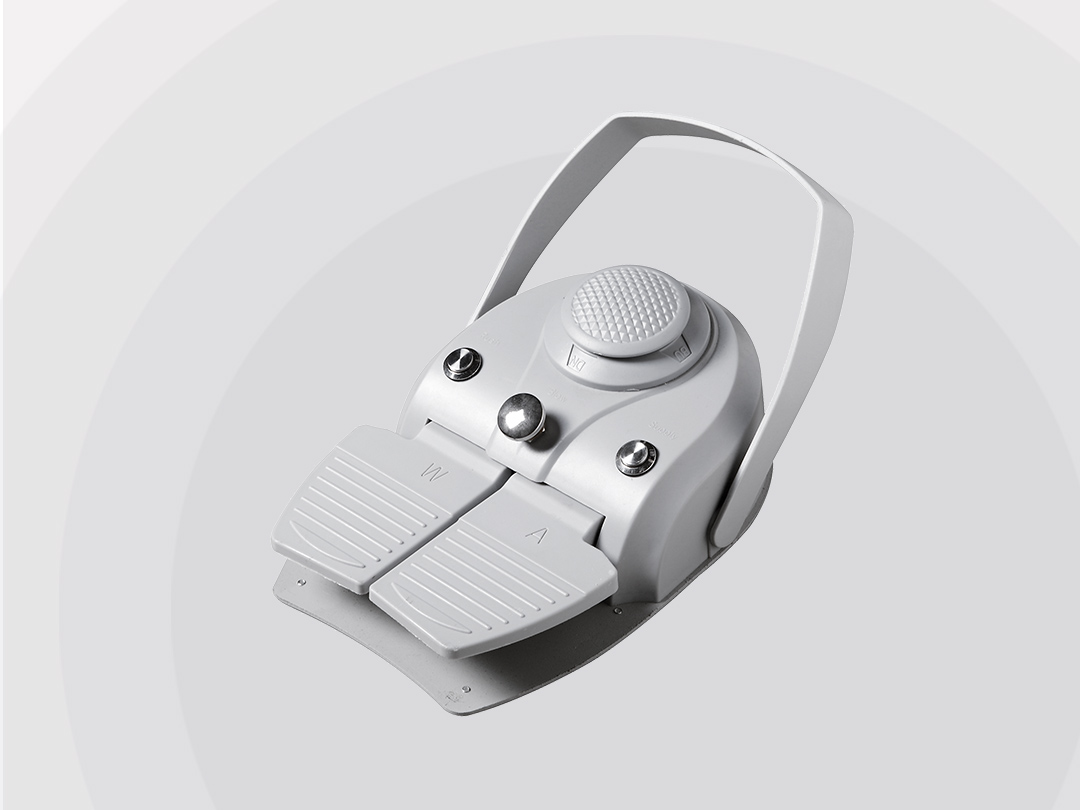
This guide is for clinic owners, dealers, and equipment buyers comparing control options for a dental chair unit. If you are still planning the room, read the dental operatory layout requirements article first. If you are comparing chair families, start from the categoría de unidades dentales and ask the supplier which foot control options are actually available for the selected model.
Why Foot Control Matters
Foot control matters because it lets the clinical team keep their hands where they belong. In daily practice, that can make the room feel cleaner, calmer, and more efficient. It can also reduce the number of times the operator has to reach for a separate switch or interrupt the procedure flow. That benefit only holds when the pedal is easy to reach, easy to use, and compatible with the rest of the chair setup.
The buyer should think about the foot control as part of the workflow system, not a small detail. A well-placed pedal can support speed, start/stop behavior, and chair position changes without forcing awkward posture. A poorly planned one can be a constant distraction.
What Foot Control Options May Change
Different foot control options may change how the chair starts, stops, adjusts, and responds during treatment. Some buyers need a simple pedal relationship. Others want more control over chair movement or delivery functions. The exact arrangement depends on the selected model, the market version, and the way the clinic wants to work.
Do not assume that every foot control looks or behaves the same. The supplier should confirm what is included, what is optional, and which functions are tied to the selected chair. A product photo can show the general idea, but it does not prove the control logic for your exact order.
Hands-Free Workflow and Operator Posture
Foot control is valuable because it helps preserve a hands-free workflow. That matters for infection-control habits, but it also matters for speed and focus. When the operator can control the chair without breaking hand position, the room feels smoother. The team is less likely to pause mid-procedure just to adjust the chair or chase a separate control.
Posture is the other half of the equation. If the pedal is positioned awkwardly, the dentist may twist, stretch, or lift the leg in ways that feel minor at first and tiring later. Buyers should test how the pedal sits in relation to the stool, the delivery side, and the normal working position before approving the layout.
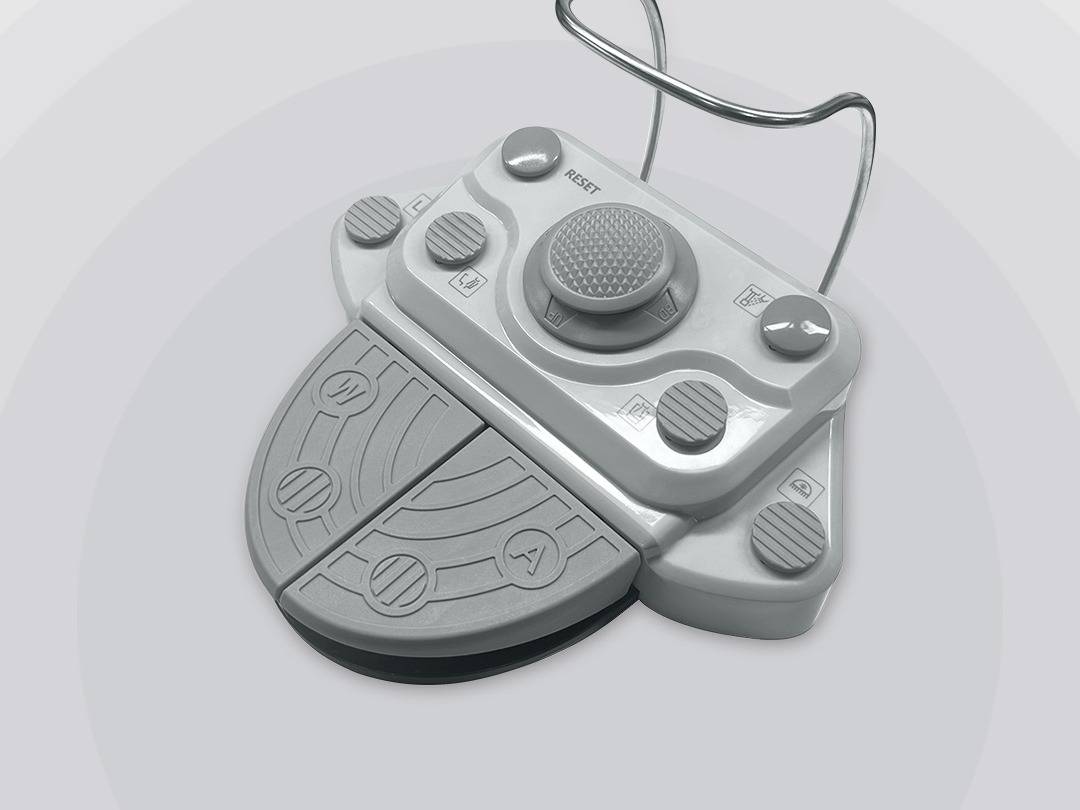
Pedal Placement and Handedness
Pedal placement can quietly make or break usability. A foot control that is easy to reach for one operator may be awkward for another. Left-handed and right-handed clinicians may also prefer different pedal positions or movement patterns. If a room is shared, the buyer should ask whether the selected model supports both habits comfortably.
Handedness is not just a personal preference. It affects the way the team enters the room, turns to the assistant, and reaches the controls during treatment. Before final approval, ask the supplier to show the placement in the actual chair configuration, not just in a catalog spread.
Cleaning Workflow and Surface Exposure
Do not claim foot control is automatically cleaner than other control methods. What matters is how the pedal is cleaned, where it sits, and how often staff touch it during the day. A simple exposed pedal may be easy to wipe but still require a clear cleaning routine. A more complex control may support more functions but create more touch points.
The buyer should ask which surfaces need daily cleaning, whether barriers are used, and how the team will keep the control area clear. The foot control should fit the clinic’s infection-prevention habits rather than forcing the staff to improvise around it.
Integration With the Delivery System
Foot control does not live on its own. It has to work with the delivery system, chair movement, and the operator’s normal reach. If the room uses a cart style, a chair-mounted style, or a special delivery arrangement, the foot control should still feel natural in the working position. The buyer should ask how the control behaves with the selected chair family and whether it changes when the delivery configuration changes.
This is where written confirmation matters. The supplier should confirm the exact control set, the functions included, and the installation notes for the ordered chair. If that information is missing, the buyer does not yet have enough detail to compare options fairly.
Compare Foot Control Options
| Decision factor | Qué comparar | Supplier proof to request | Risk if skipped |
|---|---|---|---|
| Hands-free workflow | Can the operator keep hands on the field? | Photo, drawing, or live demo of the exact model. | Interrupted procedure flow. |
| Posture | Does the pedal fit the normal stool position? | Room plan with operator position marked. | Twisting, stretching, or fatigue. |
| Start/stop logic | How the chair responds to control input. | Model-specific control description. | Confusing or slow operation. |
| Pedal placement | Where the pedal sits relative to the stool and delivery side. | Configuration sheet or installation drawing. | Poor reach and awkward leg movement. |
| Handedness | Whether the setup works for left- or right-handed users. | Written model confirmation. | Ordering a control layout that fights the operator. |
| Cleaning | How the pedal and nearby surfaces are wiped. | Supplier cleaning guidance. | Messy touch points and slower turnaround. |
| Service access | How technicians can inspect or replace the control. | Service note or parts diagram. | Harder maintenance later. |
| Delivery integration | Whether the pedal works cleanly with the selected delivery system. | Combined chair and control confirmation. | Mismatch between workflow and equipment. |
Lista de verificación del comprador
- Can the operator keep hands on the field?
- Does the pedal fit the normal stool position?
- Is the start/stop behavior clear for daily use?
- Does the foot control support the selected delivery system?
- Does the setup work for left-handed or right-handed users?
- Can the pedal be cleaned easily every day?
- Can technicians reach the control for service later?
- Has the supplier confirmed the exact configuration in writing?
Common Mistakes
Buyers often treat foot control as an afterthought. They compare the chair, delivery system, and accessories, then leave the pedal to the last minute. That is how poor placement slips through. Another mistake is assuming every model uses the same control logic. A third is forgetting that left- and right-handed operators may need different setups.
Do not rely on a product photo alone. Do not assume the nearest pedal position is the right one. And do not skip service access just because the control seems simple. A good foot control disappears into the workflow. A bad one keeps reminding the team it was not planned well enough.
PREGUNTAS FRECUENTES
What is dental chair foot control used for?
It lets the operator control chair functions while keeping hands free for treatment. The exact functions depend on the model.
How do I choose the right foot control position?
Choose the position that matches the stool, delivery side, and normal working posture. The supplier should confirm it on the room plan.
Can foot control support left-handed operators?
Yes, if the selected model and layout support it. Buyers should confirm that in writing before ordering.
Is a more complex pedal always better?
No. More functions can help, but only if the team actually needs them and the control stays easy to use.
What should I ask the supplier before approval?
Ask what the pedal controls, where it should sit, how it cleans, how it services, and whether it matches the selected delivery system.
Need help comparing dental chair foot control options? Contacte a Anya Medical a través de la página de contacto with your chair model, room plan, and workflow questions.