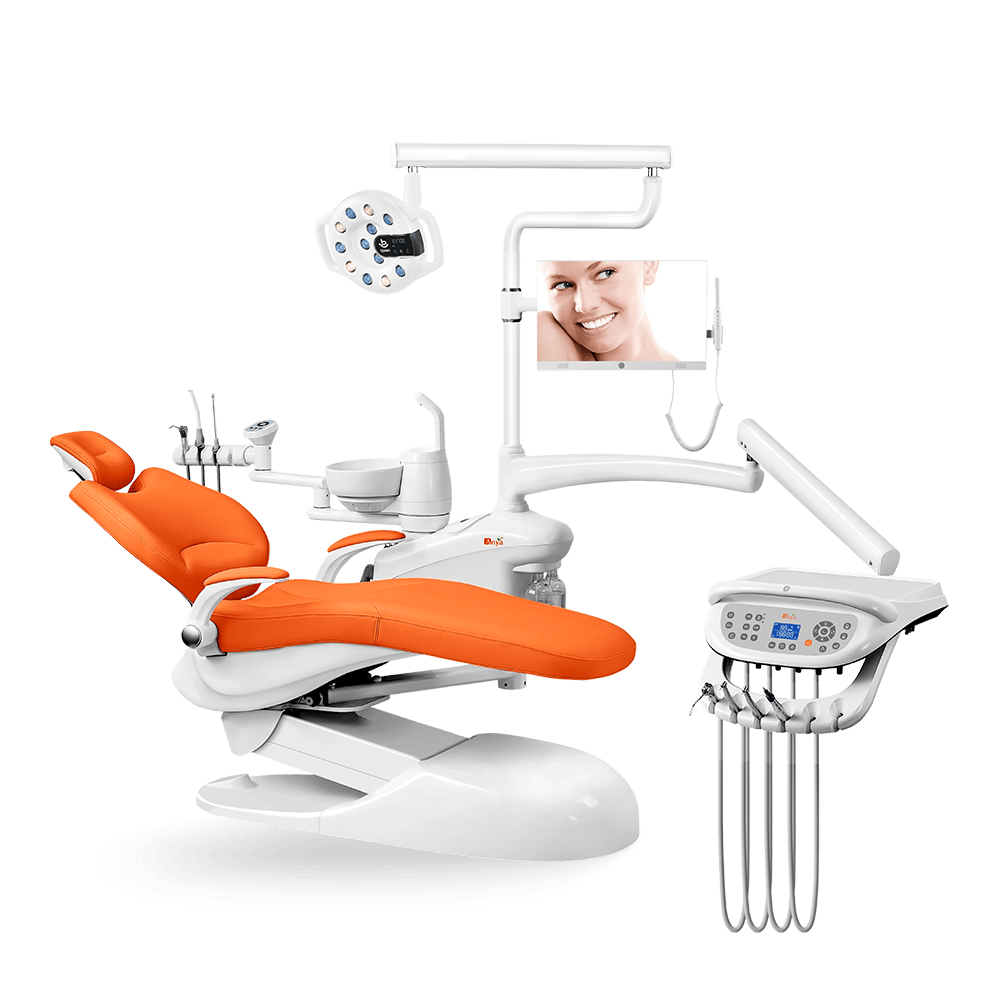
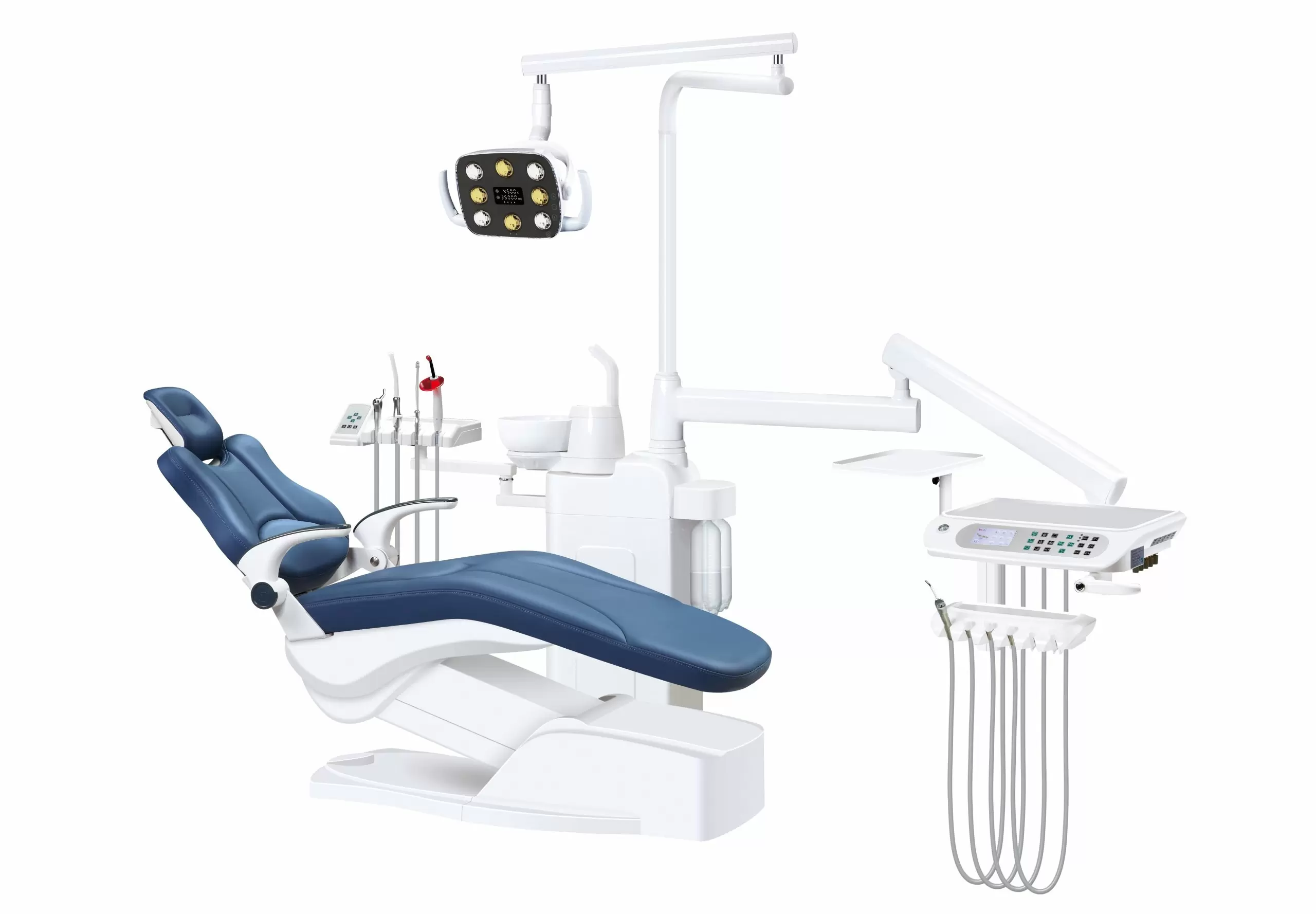
How to choose a dental assistant unit configuration comes down to workflow fit, not appearance. The assistant unit affects suction placement, tray access, doctor-assistant handoff, storage, cleaning, and service access. The wrong setup can make every appointment feel awkward. The right one can make four-handed dentistry calmer and faster. Because assistant unit designs vary by model and delivery system, buyers should confirm the exact configuration in writing before they finalize the room plan.
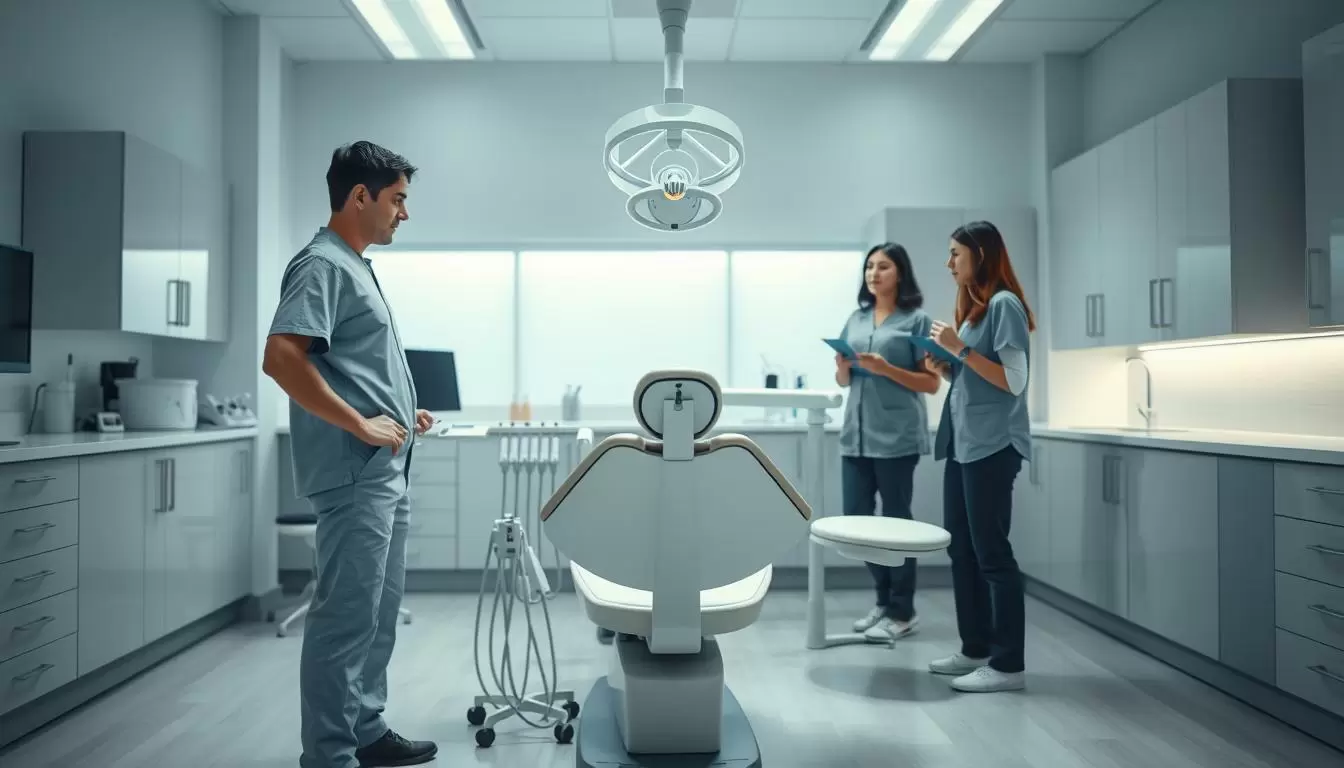
This guide is for clinic owners, dealers, equipment buyers, and clinic planners comparing assistant-side options for a dental chair system. If you are still designing the room, read the dental operatory layout requirements article first. If you are still comparing delivery styles, keep this guide alongside the cart delivery vs chair-mounted delivery systems article and the dental chair air and water line requirements guide.
For a real chair-family reference, review the verified AY-A4800II Floor-Stand Dental Unit and AY-A4800II Cart Dental Unit pages, then ask the supplier to confirm the exact assistant-side configuration in writing. The page title alone is not enough to prove the setup.
Why This Configuration Matters
The assistant unit is the working side of the room. It supports suction, handoff, tray access, and the daily rhythm between dentist and assistant. If the configuration is wrong, the team may waste motion, twist their posture, or fight the room. If the configuration is right, the room feels calmer even when the schedule is busy.
Do not treat the assistant unit as a small add-on. It is part of the operating system of the operatory. The buyer should compare configuration choices with the same care used for the chair itself, because the assistant unit determines how the room actually functions.
Start With Workflow and Handedness
The first question is how the room will be used. A single-provider room, a four-handed room, and a mixed-provider room may all need different assistant-side arrangements. Left-handed and right-handed clinicians also need different clearances and reach patterns. The best configuration is the one that matches the actual clinical habit, not the one that looks balanced in a brochure.
Ask whether the room needs a fixed assistant position, a more flexible layout, or a configuration that can support different operators over time. If the answer changes depending on who uses the room, the supplier should confirm what the exact model can support before the order is locked.
Check Reach, Suction, and Tray Access
Reach is the main test. The assistant should be able to support suction and handoff without overextending. The dentist should be able to receive instruments without awkward rotation. The tray should be close enough to use comfortably but not so close that it blocks the patient or collides with other equipment.
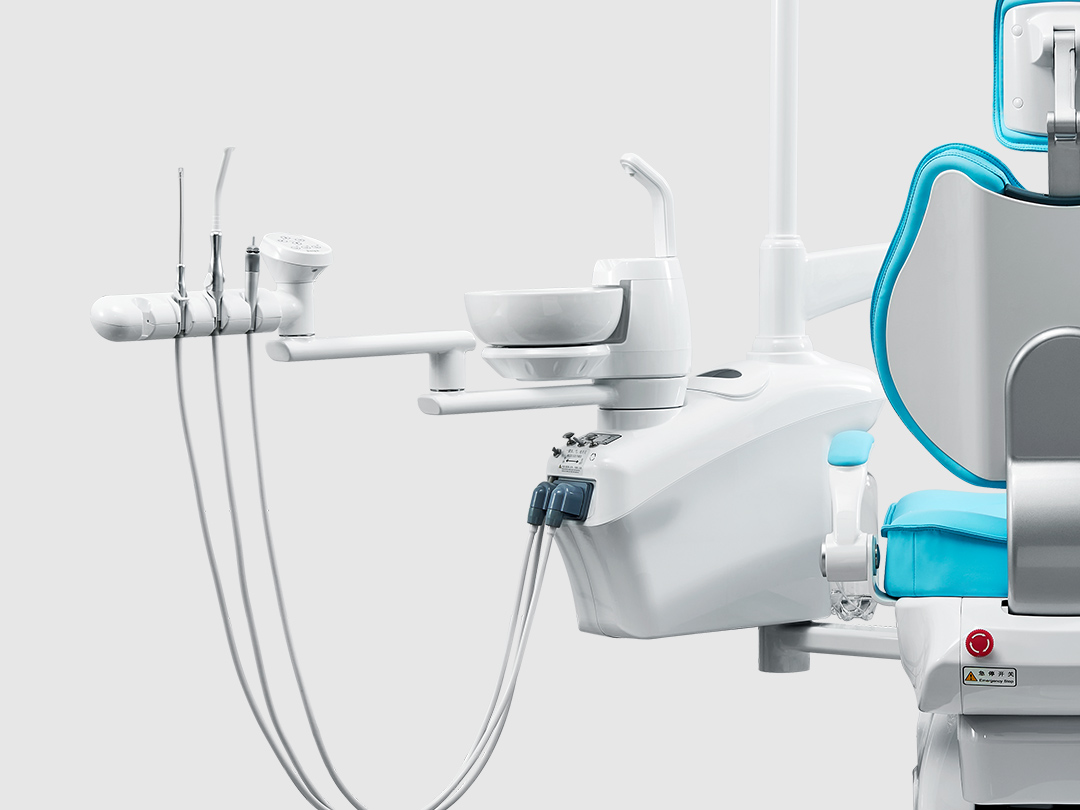
The practical question is whether the assistant can work without interrupting the dentist’s motion. If the tray is too far away, the suction is poorly placed, or the handoff path is awkward, the room will become inefficient very quickly. Buyers should request photos, drawings, or a live walkthrough from the supplier so the exact reach pattern is clear.
Review Storage, Cleaning, and Service Access
Storage is often underestimated. The assistant unit may need space for clean items, used items, disposable supplies, or tools that must be close to the chair. The layout should keep clean and used items easy to separate. It should also allow daily cleaning without trapping dirt in hard-to-reach corners.
Service access matters too. A unit that looks neat when new may become frustrating if technicians cannot reach the parts they need later. Ask where service panels are, how the unit is opened, and whether cabinets or walls will block maintenance. The buyer should not discover service problems only after the room is finished.
Confirm Integration With the Delivery System
The assistant unit does not live alone. It must fit the delivery system, chair structure, and room plan. A cart-style room may support a different assistant configuration than a fixed chair-mounted room. A top-mounted or hanging hose setup may also change how the assistant side feels in daily use. That is why buyers should confirm the exact combination rather than compare each component separately.
The supplier should clearly state what is included in the quoted setup, what is optional, and what depends on the selected chair model. If a dealer is standardizing inventory, this is the point where written confirmation becomes essential. The same family of products may have different assistant-side details in different configurations.
How to Compare Assistant Unit Options
| Decision factor | What to compare | Supplier proof to request | Risk if skipped |
|---|---|---|---|
| Assistant reach | How far the assistant must stretch during normal use. | Drawing, photo, or room walkthrough with the exact model. | Fatigue and awkward motion. |
| Suction placement | Where suction sits relative to the assistant position. | Configuration sheet and installation view. | Poor workflow and slower handoff. |
| Tray access | Whether the tray stays easy to reach during treatment. | Room plan with tray position marked. | Interrupted procedure flow. |
| Handedness | Whether the room supports left-handed, right-handed, or mixed use. | Written model confirmation. | Ordering a room that fits the wrong operator. |
| Storage and cleaning | Where clean and used items are placed and cleaned. | Photo of the full assistant zone. | Messy daily workflow and harder cleaning. |
| Service access | How technicians will reach controls or parts. | Service diagram or manual excerpt. | Harder maintenance after installation. |
| Delivery integration | How the assistant unit fits the selected delivery style. | Combined configuration confirmation. | Mismatch between the chair and the assistant side. |
Buyer Checklist
- Assistant reach: can the assistant work without overreaching?
- Suction placement: is the suction position right for the assistant side?
- Doctor-assistant handoff: does the instrument path feel natural?
- Tray access: can the tray be reached during normal treatment?
- Handedness: does the setup fit left-handed, right-handed, or mixed use?
- Four-handed dentistry: does the configuration actually support team dentistry?
- Storage: can clean and used items be separated clearly?
- Cleaning workflow: can staff wipe the surfaces without fighting the design?
- Service access: can technicians open and maintain the unit later?
- Delivery integration: does it match the selected chair and delivery system?
- Written proof: has the supplier confirmed the exact configuration in writing?
Common Mistakes
Buyers often look at appearance first and workflow second. They may treat the assistant unit as a separate accessory instead of part of the whole room system. They may forget to confirm left- or right-handed use, ignore suction and tray position, or approve the plan without checking service access. Another mistake is letting delivery-system comparison take over this article’s purpose and blur the configuration decision.
To avoid that, compare the assistant unit on the floor plan, not only in a catalog. If the supplier can explain the setup clearly in writing, the buyer is closer to a good decision. If not, the configuration is not ready for approval.
FAQ
What is included in a dental assistant unit configuration?
It usually includes the assistant-side arrangement for suction, tray access, controls, storage, and service access. The exact contents depend on the model.
How do I choose left-handed or right-handed setup?
Choose the setup that matches the main operator and the normal room workflow. If the room is shared, ask the supplier what the exact model supports.
What should I confirm about suction placement?
Confirm that suction is reachable without twisting and that it works with the dentist and assistant positions used in daily practice.
How do I judge tray access and handoff flow?
Walk through a normal procedure on the floor plan. If the tray or handoff path interrupts the assistant or dentist, the layout needs revision.
What should I ask the supplier before final approval?
Ask for the exact configuration, handedness support, suction placement, tray position, service access, and written confirmation that the unit matches the selected chair and delivery system.
Need help choosing a dental assistant unit configuration? Contact Anya Medical through the contact page with your chair model, room plan, and workflow questions.