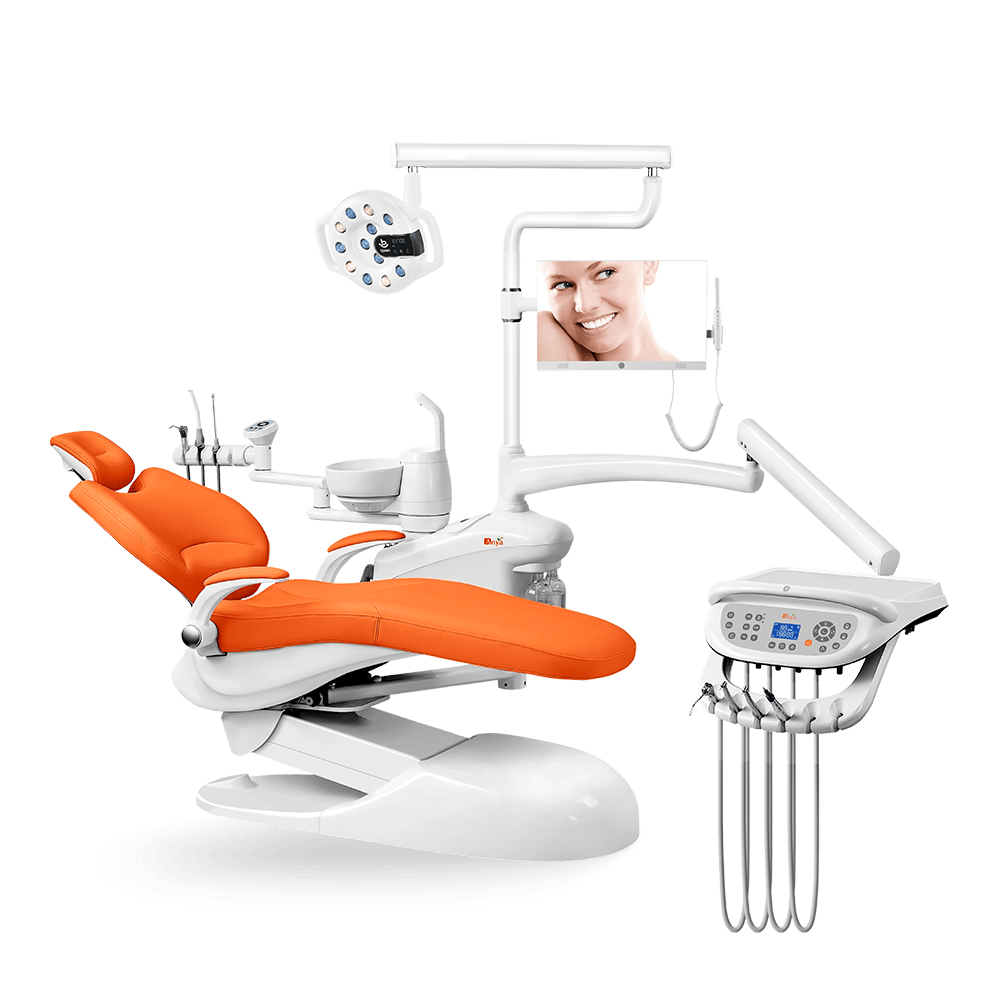
A four-handed dentistry setup works when the dental chair, assistant unit, suction access, delivery system, stools, and instrument handoff all support the same room workflow. It is not created by buying one feature. It is created by planning how the dentist, assistant, patient, and equipment move together. Buyers should confirm the exact chair model, delivery configuration, assistant-side setup, and room layout before ordering or renovating.
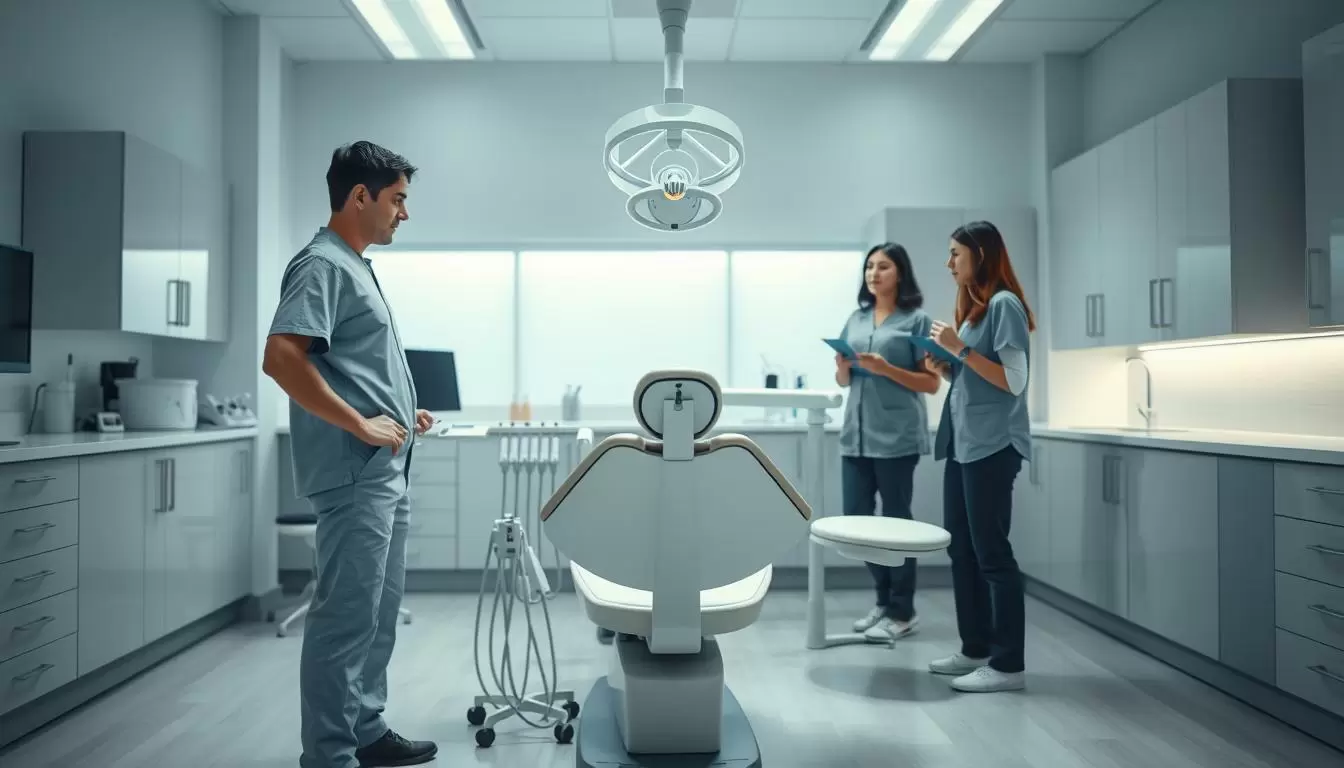
This guide is for clinic owners, dealers, equipment buyers, and clinic planners designing a room for smoother dentist-assistant workflow. It connects closely with the dental assistant unit configuration guide, the dental operatory layout requirements article, and the integración de succión en unidades dentales guide. If the chair model is still being selected, review the categoría de unidades dentales before finalizing the room plan.
What a Four-Handed Dentistry Setup Should Solve
The purpose of four-handed dentistry planning is to reduce unnecessary movement and make handoff predictable. The dentist should be able to focus on the treatment field. The assistant should be able to reach suction, instruments, and controls without crossing paths or fighting the delivery system. The patient should enter, recline, and exit without moving through a crowded clinical zone.
Keep this planning practical. Do not start with universal room dimensions or fixed ergonomic rules unless the project has verified local guidance. Start with the exact chair, room, procedure mix, and team workflow.
Start With Chair Position and Patient Entry
The chair is the room anchor. Its position affects patient entry, recline path, dentist stool movement, assistant access, delivery reach, suction routing, light position, cabinets, and service access. If cabinets or utilities are placed first, the chair may be forced into a poor working position later.
Patient entry should be checked before installation. A good four-handed room does not ask the patient to squeeze between carts, stools, drawers, or hoses. The patient should approach the chair naturally while the clinical team has enough room to work once treatment begins.
Define Operator and Assistant Zones
The dentist and assistant need separate working zones plus a shared handoff zone. These zones are not fixed by a universal clock chart in this article; they depend on the room, procedure type, handedness, chair model, and delivery system. What matters is that each person can work without blocking the other.
Review the normal appointment from the door to the chair and back out. Then review the treatment workflow: where the dentist sits, where the assistant sits, where suction is held, where instruments are passed, and where used items go. If the team crosses paths repeatedly on the drawing, the room needs revision.
Plan the Assistant Unit Around Suction Access
Suction access is central to four-handed dentistry. The assistant should be able to reach suction without twisting, stepping behind the chair, or blocking the patient path. The assistant unit should also support control access and tray workflow without creating a cluttered working side.
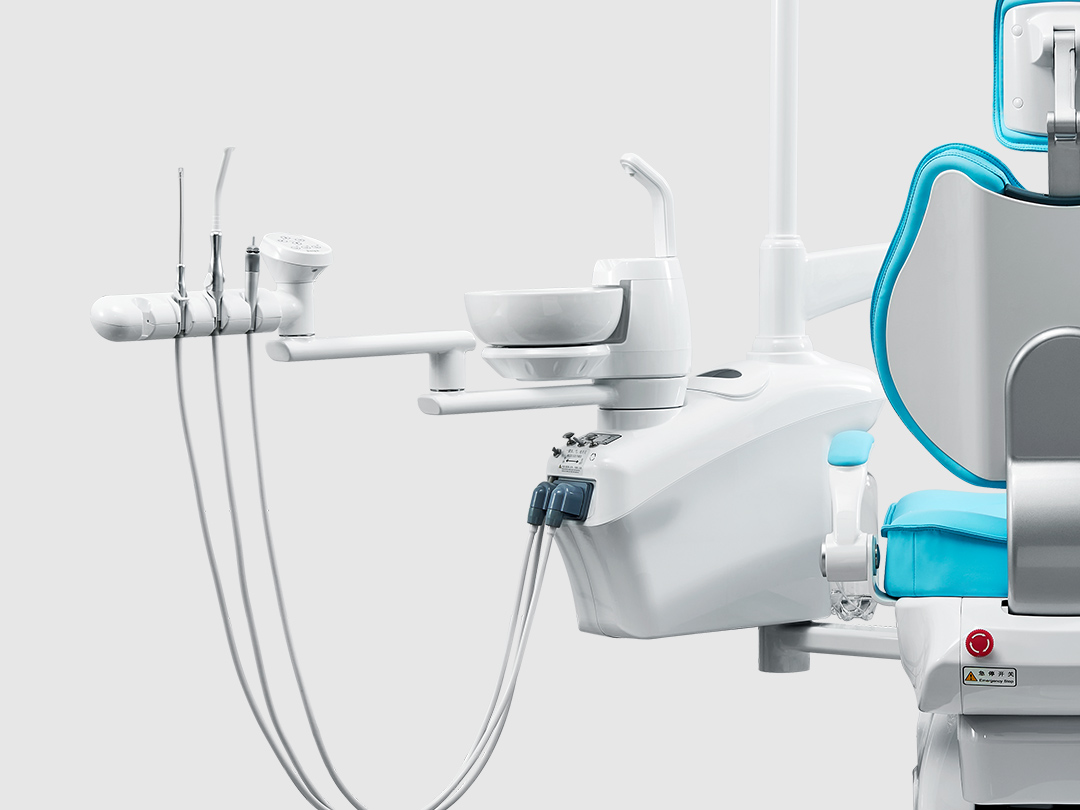
Do not assume suction access is acceptable because it looks close in a product photo. Ask the supplier to confirm the assistant-side configuration on the selected model, then review it on the actual room plan.
Match the Delivery System to the Handoff Flow
The delivery system changes instrument reach and handoff. A chair-mounted setup may feel predictable when the room is built around it. A cart delivery setup may support more flexible positioning when the room allows cart movement and parking. Neither is universally better for four-handed dentistry.
If the clinic is still comparing delivery styles, read the cart delivery vs chair-mounted delivery guide before deciding. The delivery system, assistant unit, suction, and chair position should be confirmed together so one choice does not create problems for another.
Instrument Reach and Handoff Flow
Instrument reach is a workflow question. Where do clean instruments start? Where does the assistant pick them up? Where is the handoff zone? Where do used items go after treatment? A good four-handed setup should answer these questions before furniture and storage are locked into place.
Clean item flow and used item flow should not collide. If the assistant must cross behind the dentist to return used items, the setup will slow down. If drawers cannot open when stools and delivery arms are in working positions, storage is not truly accessible.
Room Layout and Cleaning Workflow
Four-handed workflow depends on clean surfaces, accessible controls, and a room that can be turned over consistently. Hoses, trays, controls, stool bases, cart paths, and chair-side surfaces should be easy to clean according to clinic policy and supplier instructions. Do not claim a setup is hygienic simply because it looks organized.
Service access should also be checked. The final design should let technicians reach chair covers, assistant-unit points, suction areas, and delivery components without removing finished cabinets or blocking the room for unnecessary work.
Four-Handed Dentistry Setup Planning Options
| Planning factor | Chair-mounted or fixed setup | Cart or flexible setup | What buyer should confirm |
|---|---|---|---|
| Instrument reach | May support predictable reach if planned around the chair. | May support adjustable positioning if the cart path is clear. | Normal dentist and assistant positions. |
| Assistant suction access | Depends on assistant unit and suction placement. | Depends on cart position and hose route. | Whether the assistant can reach suction during treatment. |
| Patient entry | Mounted components must not block the entry path. | Cart parking must not block the entry path. | Door swing, chair position, and patient route. |
| Stool movement | Needs clearance around fixed arms and cabinets. | Needs clearance around cart and cables. | Dentist and assistant movement in working position. |
| Cleaning workflow | Review mounted controls, handles, and hoses. | Review cart surfaces, parking area, and cable route. | Daily wipe-down and barrier routine. |
| Service access | Panels and covers must remain reachable. | Cart and connection points must remain reachable. | Installer and technician review. |
Lista de verificación del comprador
- Is the room mainly for four-handed dentistry, hygiene, surgery support, or mixed use?
- Is the chair position confirmed before cabinets, utilities, stools, carts, lights, or monitors?
- Can the patient enter and exit without crossing crowded clinical zones?
- Does the room support the dentist’s working side and any shared-provider needs?
- Can the assistant reach suction, controls, and trays from the working position?
- Does the delivery system support natural instrument reach?
- Are clean-item and used-item routes planned separately?
- Can both stools move without hitting drawers, doors, hoses, carts, or delivery arms?
- Has the supplier confirmed the exact configuration in writing?
Common Mistakes
The most common mistake is designing cabinetry before confirming chair position and assistant-side workflow. Another is treating the assistant unit as an accessory instead of a core workflow component. Buyers also run into trouble when they assume suction access is fine because it looks close in a photo, compare quotes without checking delivery style, or forget stool movement until installation day.
A four-handed room should be walked through before approval. If the team cannot explain where the dentist sits, where the assistant sits, where instruments transfer, and where used items go, the setup is not ready.
PREGUNTAS FRECUENTES
What is a four-handed dentistry setup?
It is a treatment room arrangement where the dentist and assistant can work together around the patient with planned chair position, suction access, instrument reach, and handoff flow.
What equipment matters most?
The chair, assistant unit, suction access, delivery system, stools, light, storage, and room layout all matter because they affect movement and handoff flow.
Is chair-mounted delivery better for four-handed dentistry?
Not always. Chair-mounted delivery can support predictable reach in some rooms, while cart delivery may support flexible positioning in others. The better option depends on the selected model and layout.
How should buyers check suction access?
Buyers should confirm whether the assistant can reach suction during normal treatment without crossing the patient path, fighting the delivery system, or blocking stool movement.
What should I send Anya Medical for setup advice?
Send the target chair model, room layout, preferred delivery system, assistant-side needs, procedure mix, and patient entry or utility constraints.
Planning a four-handed dentistry setup? Contacte a Anya Medical a través de la página de contacto with your room layout, target chair model, delivery preference, and assistant-side workflow questions.