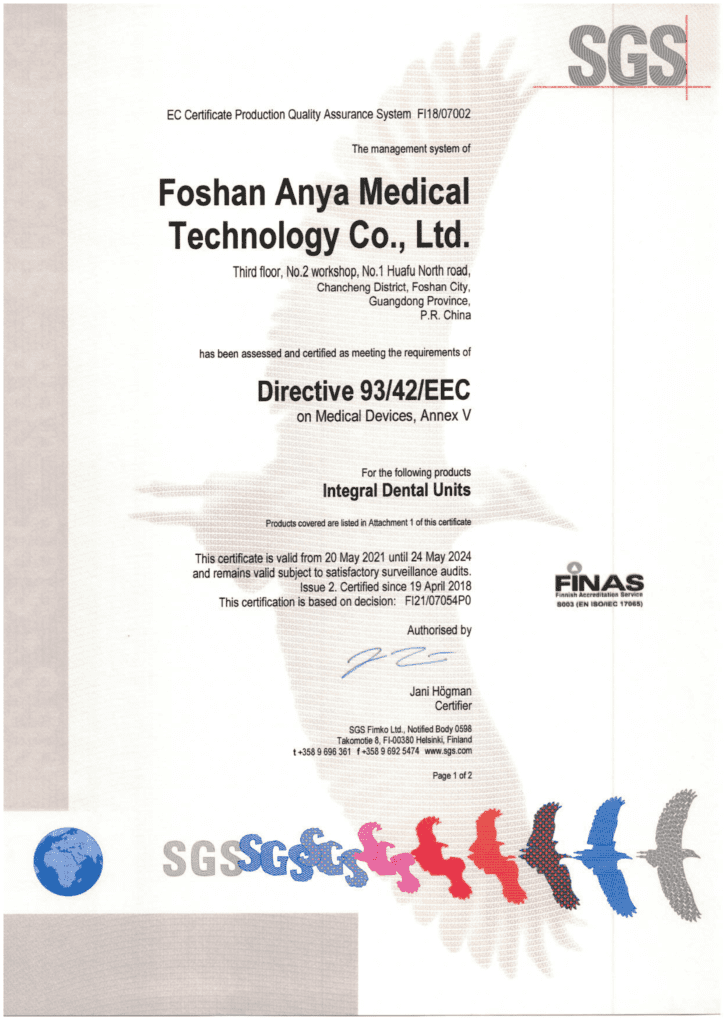
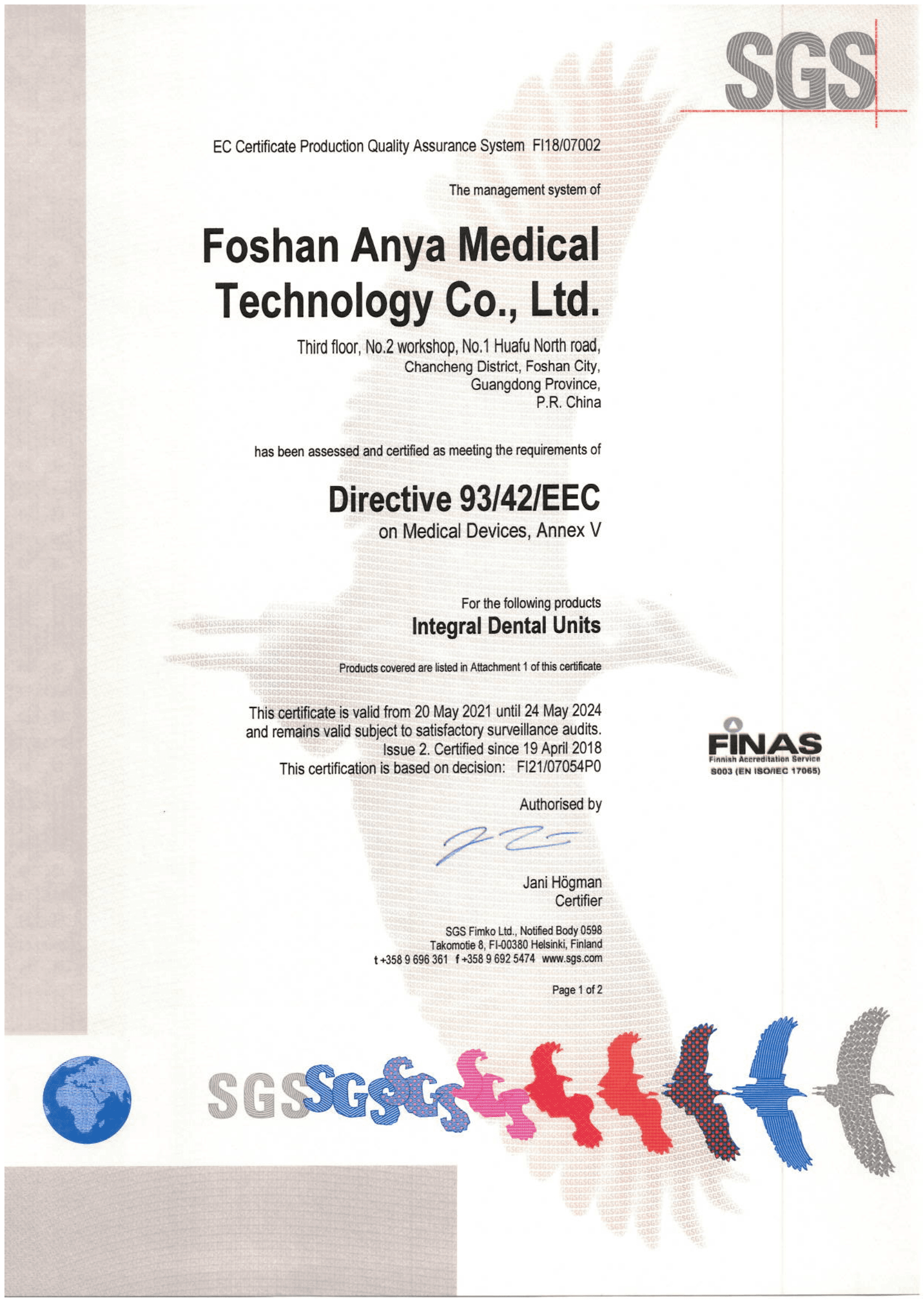
Dental chair CE ISO FDA documents should be treated as due-diligence materials, not as automatic proof that every product model can enter every market. Buyers should request current, model-specific, legal-entity-specific, and scope-specific documents before paying a deposit, onboarding a dealer line, or preparing import files. The safest dental chair CE ISO FDA documents review checks whether the document names the correct manufacturer, address, model or product family, applicable regulation or standard, issuer, validity period, and destination-market purpose. Final requirements still depend on product configuration, buyer role, destination country, and regulator or customs decisions.
For the buying step, compare the best dental chair guide so document checks stay tied to the selected model and support plan.
Review this page with the certificate verification checklist, import documents checklist, HS code and duty guide, landed cost worksheet, and RFQ guide.
This guide is for clinic groups, importers, distributors, dental equipment dealers, and procurement teams reviewing a dental chair supplier. It complements manufacturer verification, factory audit checks, and the existing ISO 15225 labeling guide. Here the focus is narrower: what should buyers understand about CE, ISO 13485, and FDA-related documents?
What Compliance Documents Can and Cannot Prove
Compliance documents can help a buyer understand whether a supplier has organized quality, regulatory, labeling, and market-entry materials. They can also help importers and dealers prepare questions for their compliance adviser, broker, or regulator. But a document image is not a universal passport. One certificate may name a quality management system, one Declaration of Conformity may name specific EU legislation and products, and one registration record may apply to a specific company role. Buyers should check the exact meaning before using the document in a purchasing decision.
| Document type | What it may support | What not to assume |
|---|---|---|
| EU Declaration of Conformity | Manufacturer declaration for covered product scope and applicable EU requirements. | Do not assume it covers every model, accessory, or destination outside the stated scope. |
| CE certificate or notified body certificate | Where required, evidence related to a conformity assessment route and stated scope. | Do not treat it as EU approval, a safety assurance, or proof for unrelated products. |
| ISO 13485 certificate | Quality management system scope for a named legal entity, site, and activity. | Do not call it product certification for a specific dental chair model. |
| FDA establishment registration or device listing | Company and listed-device information for U.S. regulatory context where relevant. | Do not call registration or listing FDA approval, clearance, certification, or authorization. |
| Test report, manual, label, or technical file excerpt | Support for model details, labeling, standard references, and product-description review. | Do not use an excerpt as complete proof unless the scope and source are clear. |
CE Documents for Dental Chair Buyers
For products placed on the EEA market, buyers should confirm whether the exact dental chair, dental treatment unit, accessory, or configured package falls under the EU Medical Device Regulation and any other applicable EU product legislation. CE marking indicates that the manufacturer has completed the applicable conformity assessment and declared conformity with applicable EU requirements. It is not an EU approval, safety assurance, or country-of-origin mark.
Ask for the current EU Declaration of Conformity and check whether it identifies the manufacturer, product or model scope, applicable legislation, standards or references, signatory, date, and any relevant authorized representative or importer information where required. If a notified body is involved for the applicable route, check the notified body name or number against official sources such as the European Commission’s notified body resources and the certificate issuer record.
Useful CE review questions include:
- Does the document name the same legal manufacturer shown in the quote, invoice, and product label?
- Does the product or model scope match the dental chair being ordered?
- Does the document identify the applicable regulation or standard references?
- Is the document current, signed, and traceable to a responsible entity?
- If a notified body is shown, can the buyer verify the body and certificate scope?
- Does the buyer’s destination market require additional documents, translations, registration, or importer steps?
The official European Commission pages on CE marking, manufacturer duties, conformity assessment, medical-device notified bodies, and the EU MDR text are useful concept references. They do not replace product-specific regulatory review.
ISO 13485 Documents: Quality System, Not Product Certification
ISO 13485:2016 is a medical-device quality management system standard. A certificate can support supplier due diligence, but it should be checked for the named legal entity, site, scope, activities covered, issuer or accreditation, and validity period. It does not by itself certify a specific dental chair model, replace CE marking, replace FDA requirements, or prove that a device can be imported into all destinations.
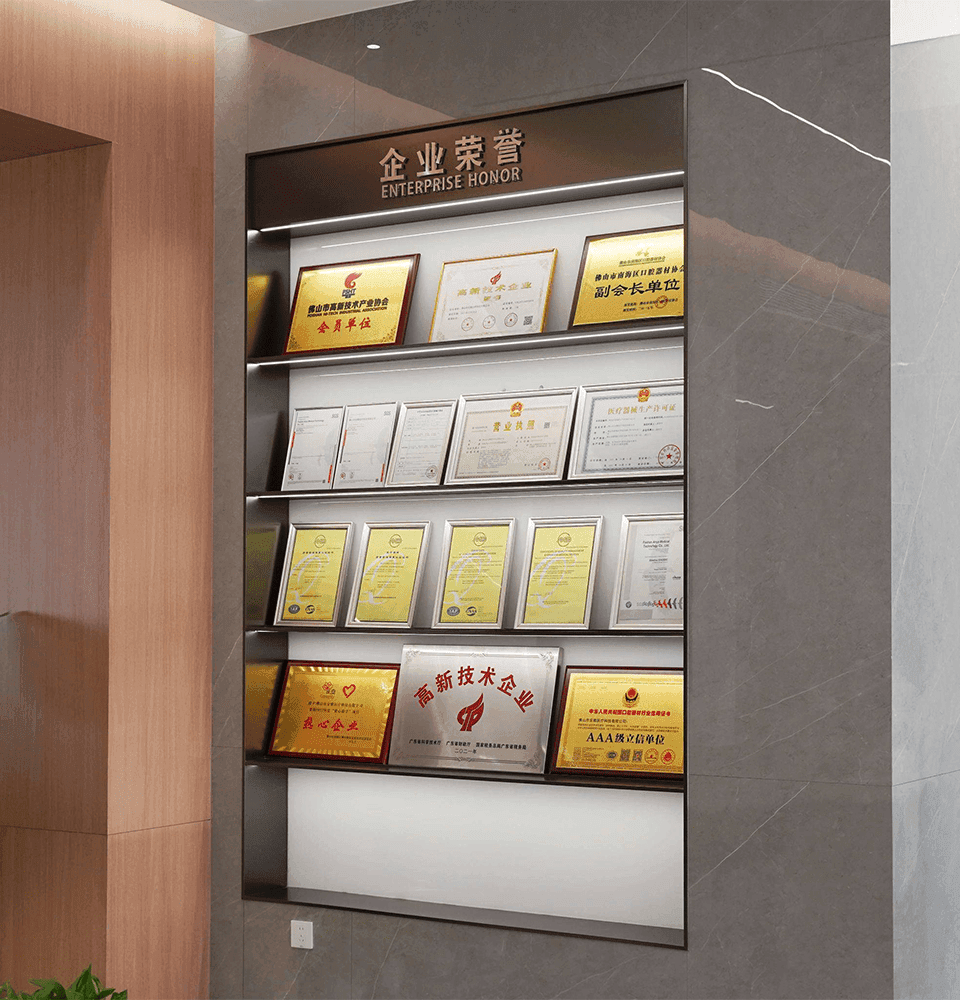
When reviewing an ISO 13485 certificate, buyers should not stop at the logo. Ask whether the certificate names the entity that manufactures or controls the relevant product, whether the address matches the supplier record, whether the scope includes relevant activities, and whether the certificate is current. If the supplier uses an agent, export company, or private-label arrangement, ask which legal entity is responsible for quality system control and product documentation.
Official ISO pages for ISO 13485 medical devices and ISO 13485:2016 are good starting points for understanding the standard’s purpose.
FDA-Related Documents for Dental Chair Buyers
For U.S. imports, buyers should confirm FDA classification and product code for the exact configuration. FDA materials distinguish dental chairs without operative units, dental chairs with operative units, and dental operative units or accessories. Requirements can differ by product code and configuration, so buyers should avoid broad statements that present FDA status or 510(k) treatment as identical for every chair.
Establishment registration and device listing do not mean FDA approval, clearance, certification, or authorization. If a device requires 510(k), FDA clearance is based on substantial equivalence. PMA approval is a different pathway generally associated with higher-risk Class III devices. Buyers should ask the supplier which FDA-related records, product code, listing information, or clearance documents apply to the exact product, then verify those claims through official FDA resources or a qualified regulatory professional.
| FDA-related item | Buyer check | Risk if misunderstood |
|---|---|---|
| Device classification | Confirm product code and configuration for the exact dental chair or unit. | Requirements may differ if the product configuration changes. |
| Registration and listing | Check company and listed-device information where relevant. | Registration/listing can be mistaken for approval or clearance. |
| 510(k) clearance | Ask whether a 510(k) applies to the product and request document references if claimed. | A broad FDA-status phrase may hide a different regulatory status. |
| Import entry information | Confirm FDA product code, manufacturer details, and any Affirmation of Compliance data with a broker. | Incomplete entry data can delay review or create follow-up requests. |
Official FDA references include importing medical devices, device registration and listing, FDA’s guidance that registration is not approval, the overview of device regulation, and FDA product classification resources such as dental chair classification information.
Document Verification Checklist Before Deposit
Use this checklist before deposit payment, dealer onboarding, private-label discussions, or import document preparation. The goal is not to decide legal compliance alone. The goal is to identify what is clear, what is pending, and what needs a professional review.
| Check | Question to ask | Evidence to keep |
|---|---|---|
| Legal entity | Does the document name match the quote, invoice, label, manufacturer, or responsible company? | Document copy, quote, invoice draft, business name, and address comparison. |
| Model scope | Does the document cover the quoted model or product family? | Model list, product page, configuration sheet, manual, or document annex. |
| Validity | Is the document current and traceable to an issuer? | Issue date, expiry date, issuer, certificate number, and lookup path if available. |
| Regulatory meaning | Is the supplier using accurate wording for CE, ISO 13485, FDA, or other documents? | Written explanation, official reference, and adviser or broker notes. |
| Destination fit | Does the buyer’s country require additional registration, translation, legalization, or importer action? | Importer checklist, broker request, distributor requirement, or local adviser note. |
Red Flags in CE, ISO, and FDA Document Review
- The supplier uses broad worldwide compliance wording without naming the product, market, or document scope.
- The document is cropped, blurred, expired, unsigned, or missing issuer information.
- The company name differs across certificate, quotation, bank account, invoice, and product label without explanation.
- The model shown in the quote is not named in the document or annex.
- FDA registration or listing is described as FDA approval or FDA certification.
- ISO 13485 is described as product certification for every dental chair model.
- A notified body number is displayed but cannot be matched to the claimed certificate scope.
- The supplier refuses reasonable requests for current, model-specific documentation before payment.
How to Ask Anya Medical for Document Details
For model-specific document review, use Anyamedical’s dental chair unit category and product pages such as AY-A3600 or AY-A6000 as product-reference sources. Then send the target model, destination country, buyer role, document purpose, and required market questions through the contact page.
If you are still preparing the purchase request, include CE, ISO 13485, FDA, label, manual, and document-scope questions in your dental chair RFQ. If you also need cost planning, connect the document review to the landed cost worksheet so broker and import questions are tracked separately.
FAQ
Is ISO 13485 the same as dental chair product certification?
No. ISO 13485 is a medical-device quality management system standard. A certificate should be checked for legal entity, site, scope, issuer, and validity, but it does not by itself certify a specific dental chair model.
Is FDA registration the same as FDA approval?
No. FDA establishment registration and device listing do not mean FDA approval, clearance, certification, or authorization. Buyers should verify the exact product code, listing, and any required clearance status through official resources.
What CE documents should dental chair buyers request?
Ask for the current EU Declaration of Conformity, product or model coverage, applicable legislation and standards, manufacturer details, and, where required, notified body certificate information. Confirm the scope before relying on it.
Can one certificate cover every dental chair model?
Do not assume that. A certificate or declaration may cover a legal entity, site, activity, product family, or specific model range. Buyers should compare the document scope with the exact quoted chair and configuration.
Who confirms whether documents are enough for my market?
The buyer should confirm market requirements with the importer, distributor, local regulatory adviser, customs broker, or relevant authority. Supplier documents are inputs for review, not a universal clearance assurance.
Need model-specific document details? Send your target model, destination, and CE/ISO/FDA questions through Anya Medical’s contact page and request the available documentation package for review.