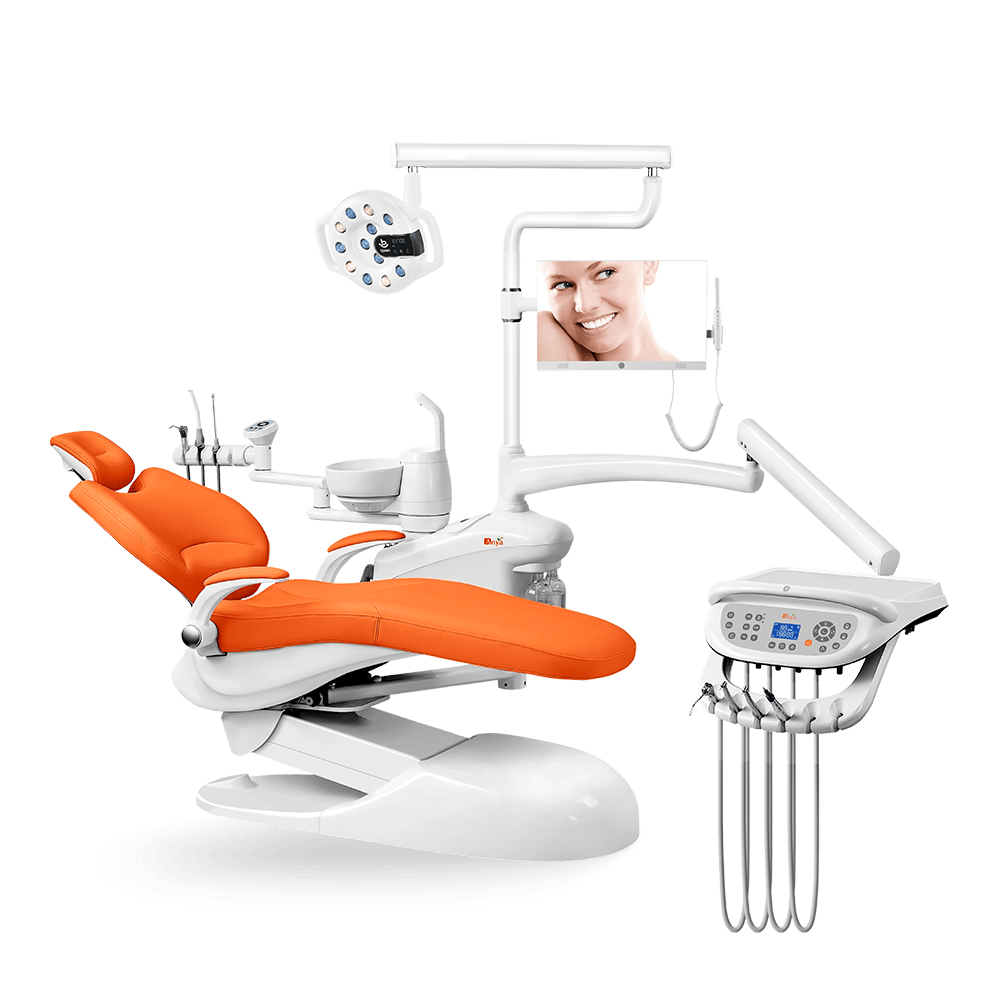
A left-handed dental chair setup should be confirmed before ordering because the operator side, assistant side, delivery reach, suction access, patient entry, and utility plan can all change the final workflow. The key question is not only whether a chair is called left-handed. Buyers need to ask which parts can be positioned for a left-handed dentist, which parts are fixed, and how the selected configuration will work in the actual operatory.
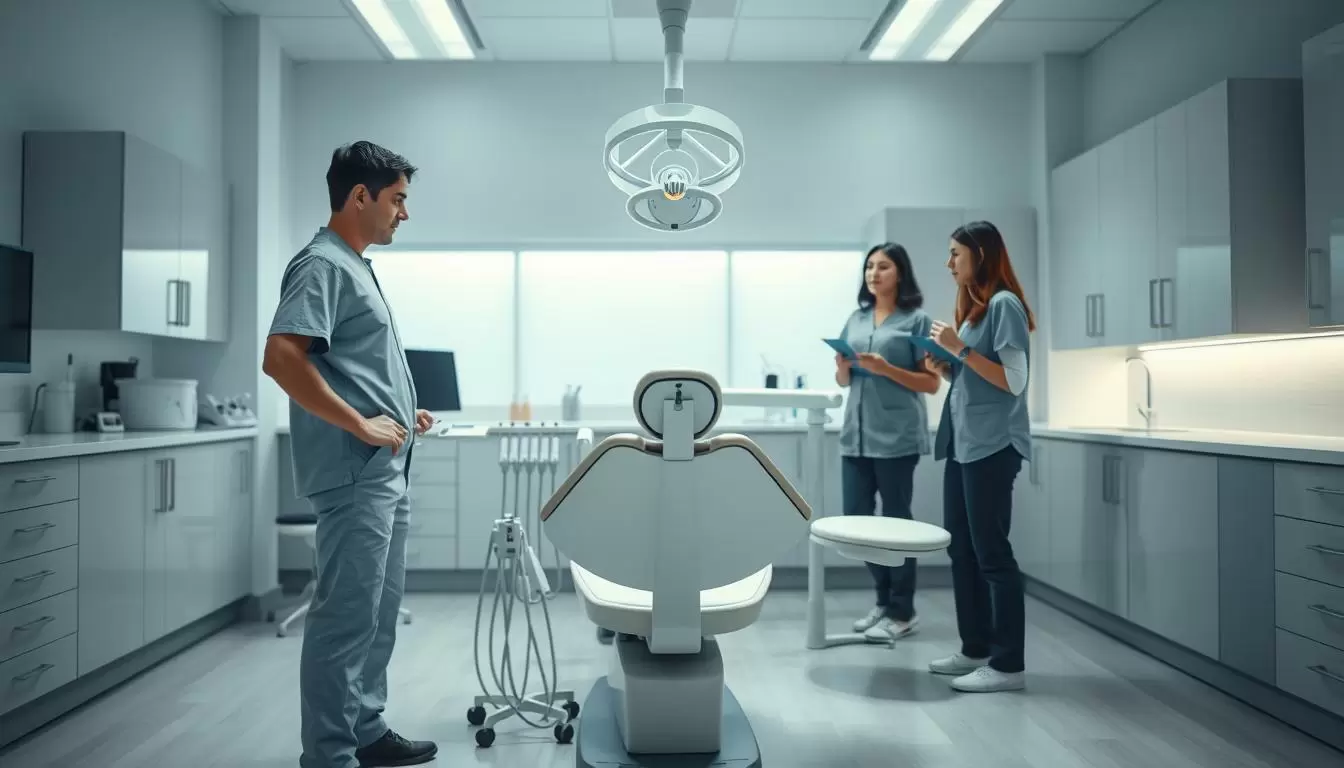
This guide is for clinic owners, left-handed dentists, dealers, and clinic planners who want to avoid ordering a standard room layout that later feels awkward. It connects with the guides on dental chair positioning, four-handed dentistry setupy dental assistant unit configuration. Buyers comparing chair models can also review the categoría de unidades dentales before discussing configuration details.
What a Left-Handed Dental Chair Setup Means
A left-handed dental chair setup is a room and equipment arrangement planned around a left-handed operator’s normal working position. It may involve the delivery system, assistant unit, suction location, tray position, dental light, patient entry path, monitor position, foot control, and stool movement. It is not safe to assume that every right-handed setup can be converted later.
The practical goal is simple: the dentist should be able to reach instruments and see the treatment field without constantly working across the patient or against the assistant. The assistant should also be able to reach suction, controls, and handoff zones without blocking the dentist. Both sides matter.
Questions to Ask Before Ordering
Start by asking whether the exact chair unit can be supplied as left-handed, right-handed, ambidextrous, or with a cart delivery option. Ask this for the exact model, not for the brand in general. If the supplier answers broadly, ask for the configuration in writing and confirm which components are fixed.
Next, ask how the delivery system will sit in the room. A chair-mounted delivery system can work well when the chair and operator side are planned together. A cart delivery system may offer more layout flexibility, but it still needs a clear parking area, hose route, and patient path. If delivery style is still open, compare the tradeoffs in the cart delivery vs chair-mounted delivery guía.
Then ask how the assistant side will work. A left-handed dentist may still work with a right-handed assistant, a left-handed assistant, or a rotating team. Suction, assistant controls, instrument transfer, and tray access should be checked before the quotation is approved.
If the room will be shared by several dentists, ask whether the setup is meant to support one main operator or several working styles. A dedicated left-handed room can be simpler when one dentist uses it most of the time. A shared room may need a more flexible delivery approach, but flexibility should be tested against real changeover steps, not just described as a feature.
Left-Handed, Right-Handed, Ambidextrous, and Cart Setups
| Setup type | Best suited for | Key buyer questions | Planning risk if ignored |
|---|---|---|---|
| Left-handed setup | Rooms mainly used by a left-handed dentist. | Which delivery, assistant, light, and control positions are available? | The dentist may need to reach across the patient or work around fixed equipment. |
| Right-handed setup | Standard rooms used by right-handed dentists. | Can it support occasional left-handed use, or is it fixed? | A left-handed operator may inherit a room built for someone else’s workflow. |
| Ambidextrous setup | Shared rooms or multi-provider clinics. | Which components can move, and how long does changeover take? | The room may look flexible but still limit assistant access or patient entry. |
| Cart delivery setup | Clinics that need layout flexibility or different operator positions. | Where will the cart park, move, connect, and be cleaned? | The cart may block stools, doors, hoses, drawers, or patient movement. |
Delivery Reach and Assistant Access
The delivery system is often the first point of discomfort in a left-handed room. Buyers should review handpiece reach, tray position, control access, and whether the delivery path crosses the patient entry route. Do not judge this from a product photo alone. Review the room plan with the patient reclined, the dentist seated, the assistant seated, and the delivery system in working position.
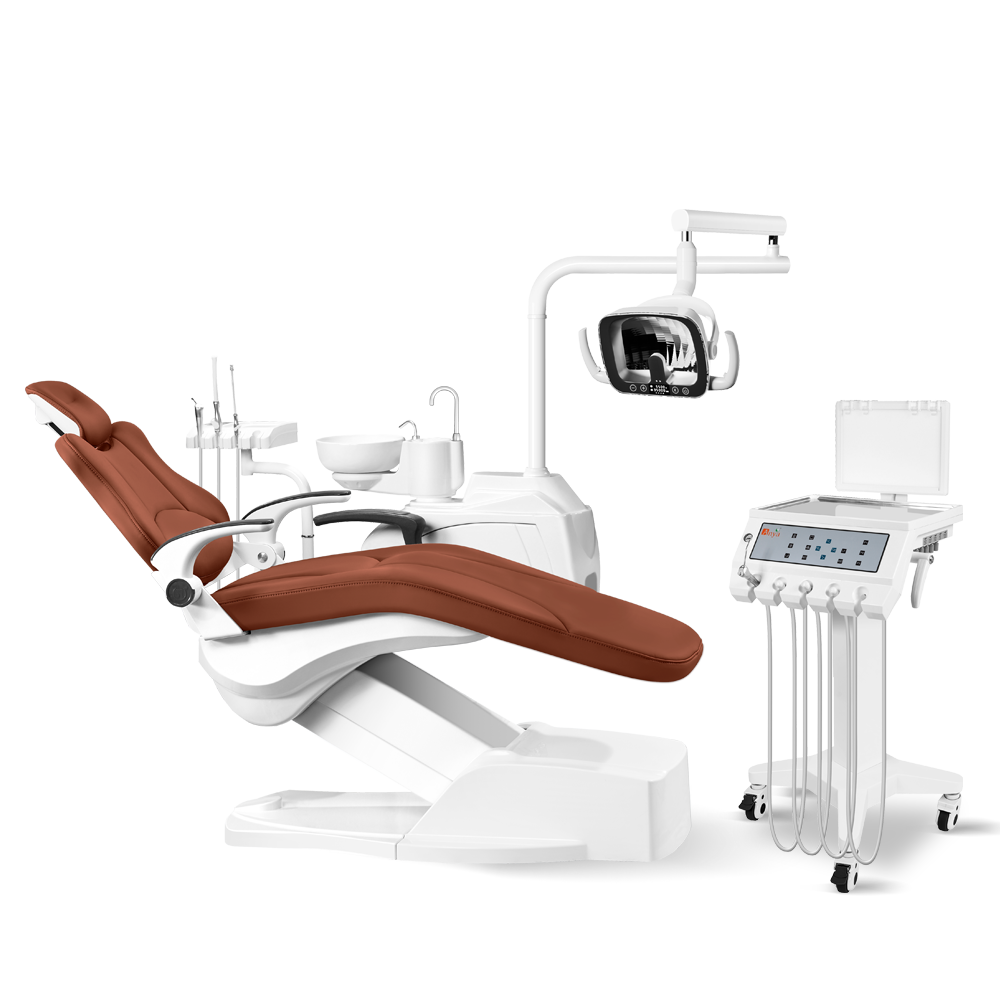
Assistant access needs the same attention. Suction hoses, assistant controls, tray reach, and clean-item flow should support the way the team actually works. If the room is designed for four-handed dentistry, the setup should be checked against assistant-side movement, not only the dentist’s dominant hand.
Ask the team to describe a normal appointment in sequence: patient entry, seating, reclining, treatment, cleanup, and exit. Then mark where the dentist, assistant, delivery system, suction, and used instruments sit at each stage. This simple workflow pass often reveals conflicts that are easy to miss in a static floor plan.
Room Layout and Utilities
A left-handed setup can fail if the room utilities were planned for a different configuration. Plumbing, electrical, compressed air, suction, drainage, cabinetry, monitor arms, and door swing can all limit the final chair position. Before production or shipment, share the operatory drawing with the supplier and installer.
The broader dental operatory layout requirements guide can help buyers think through room access before final approval. If utility locations are already built, ask the supplier what can be adapted and what should remain fixed. It is better to learn this before payment than during installation.
Buyer Checklist Before Confirmation
- Confirm whether the exact chair model supports left-handed, right-handed, ambidextrous, or cart-based configuration.
- Ask which components are fixed and which can be positioned for the selected workflow.
- Review delivery system location, handpiece reach, tray position, and foot control use.
- Check assistant suction access, controls, and instrument handoff flow.
- Share room layout, door swing, cabinetry, utility locations, and patient entry path.
- Confirm whether the room is for solo dentistry, four-handed dentistry, or shared providers.
- Ask how cleaning access and service access will work after installation.
- Get the final configuration, accessories, and installation notes in writing.
Common Mistakes
The biggest mistake is ordering a standard right-handed unit and assuming it can be changed later. Another is focusing only on the dentist while forgetting the assistant. A room that gives the dentist reach but blocks suction, tray transfer, or patient entry is still poorly planned.
Buyers also make trouble for themselves by approving cabinetry before chair position, choosing delivery style from a catalog image, or failing to tell the supplier that the room will be used by a left-handed operator. Small details in the order discussion can decide whether the final room feels natural or cramped.
Perspectiva del fabricante y del distribuidor
A serious supplier should ask for the room plan, preferred operator side, delivery preference, assistant-side needs, utility constraints, and installation context before confirming a left-handed setup. Dealers should also document what the clinic approved. This protects both sides if the room, model, or delivery style changes before installation.
If a supplier cannot confirm whether a specific setup is available, treat that as a question to resolve before paying. A clear answer may be less exciting than a promise, but it is far more useful when the chair arrives.
Dealers serving left-handed dentists should keep setup notes with the quotation: chair model, delivery style, assistant-side plan, utility assumptions, product images used for reference, and any items that still need installer confirmation. Those notes make the order easier to review when the clinic, dealer, and manufacturer are in different time zones.
PREGUNTAS FRECUENTES
What is a left-handed dental chair setup?
It is a chair and operatory configuration planned around a left-handed operator, including delivery reach, assistant access, suction placement, patient entry, and room workflow.
Is every dental chair available in a left-handed setup?
No. Buyers should ask whether the exact chair unit supports left-handed, right-handed, ambidextrous, or cart-based configuration before ordering.
Can a right-handed dental chair be converted later?
Sometimes parts may be adjustable, but conversion depends on the model and room layout. Confirm this with the supplier before purchase.
Is an ambidextrous chair better?
It depends on the clinic. Ambidextrous planning may help shared rooms, while a dedicated left-handed setup may suit a room mainly used by one left-handed dentist.
What should I send for setup advice?
Send the chair model under consideration, room drawing, utility locations, delivery preference, assistant workflow, and any photos of the existing operatory.
Planning a left-handed dental chair setup? Contacte a Anya Medical a través de la página de contacto with your room plan, target chair model, and workflow questions before confirming the order.