

Dental chair materials affect how the chair feels in daily use, how easy it is to clean, how well it resists visible wear, and how quickly a technician can identify parts when service is needed. Buyers should not judge materials only from brochure words such as “premium” or “durable.” A better approach is to inspect the frame and base, upholstery, ceramic bowl or spittoon area, tubing, hoses, controls, trays, covers, and service access points for the exact dental chair model being quoted.

This guide is for clinics, importers, distributors, and dental equipment dealers comparing models before a purchase or trial order. It links with the dental chair quality control guide, but the focus here is narrower: what materials and surfaces should a buyer inspect before deciding whether a chair fits the clinic’s use case?
What “Dental Chair Materials” Really Means
When buyers talk about dental chair materials, they are usually talking about three different things at once. The first is structural material, such as the frame, base, lifting structure, brackets, and support parts. The second is contact and cleaning surfaces, such as upholstery, armrests, headrest surfaces, spittoon area, trays, handles, and covers. The third is service material, such as tubing, hoses, connectors, control panels, foot controls, and replaceable parts.
A strong buying review separates these areas. A heavy-looking frame does not prove that the upholstery is easy to clean. A smooth control panel does not prove that tubing is easy to replace. A polished bowl does not prove that every connector is accessible. Buyers should ask for model-specific material details, product photos, service access notes, and clear configuration confirmation before comparing quotes.
Frame and Base
The frame and base are the foundation of the chair. Buyers should inspect whether the base looks stable, whether visible welds or joints appear clean, whether painted or coated surfaces look even, and whether panels and covers fit properly. Do not infer a specific alloy, coating, or load result from a photo. Ask the manufacturer to confirm the model’s structural design, surface treatment, and any available documentation that applies to the quoted version.
For movement behavior, use the separate dental chair stability test guide. For materials, keep the question more practical: does the visible structure look consistent, protected, and serviceable, and can the supplier explain the material choices without vague claims?
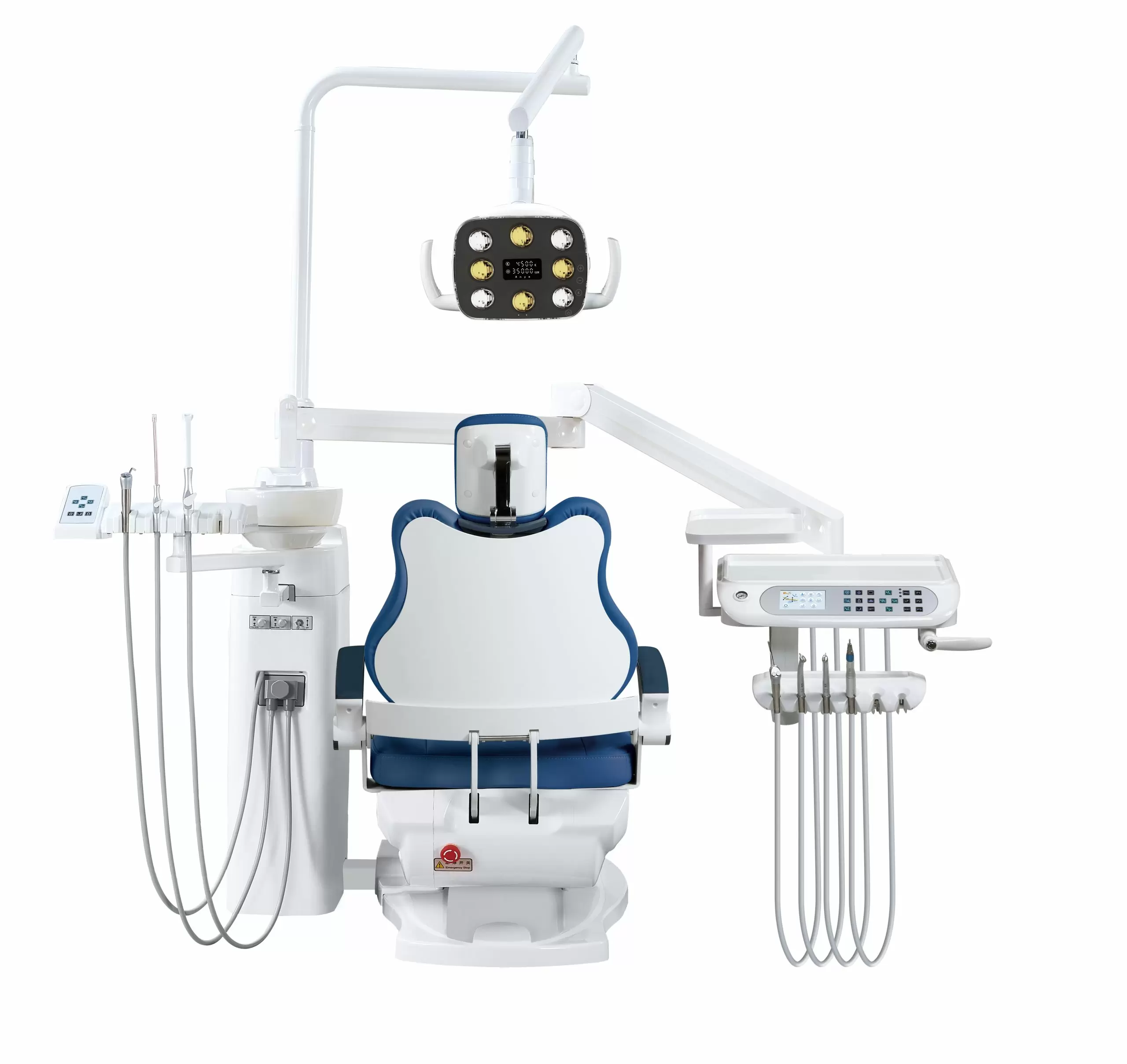
Upholstery and Patient Contact Surfaces
Upholstery is one of the most visible material choices for clinics. It affects patient comfort, cleaning workflow, perceived quality, and replacement planning. Buyers should inspect seams, edges, cushion shape, surface texture, stitching or bonding quality, color consistency, and whether the material appears stretched, loose, cracked, or uneven in product photos or sample units.
A supplier may describe upholstery as easy to clean, comfortable, or wear-resistant. Those claims should be checked against the model manual, cleaning instructions, and sample condition. Avoid assuming that a surface is compatible with every disinfectant or every clinic protocol. Ask which cleaning instructions the supplier provides and whether replacement upholstery can be ordered for the same model.
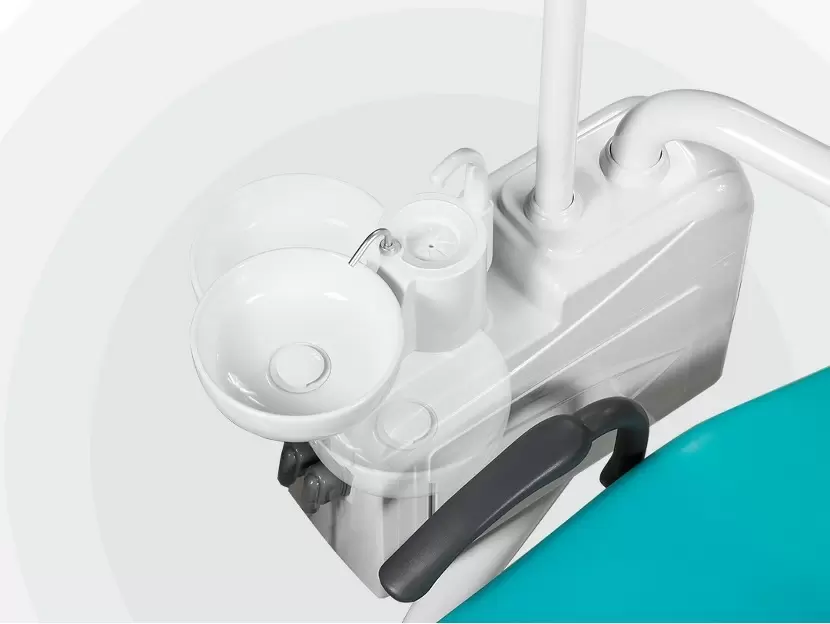
Ceramic Bowl and Spittoon Area
The ceramic bowl or spittoon area is a daily-use surface that can affect cleaning, patient perception, and service access. Buyers should inspect the bowl shape, removable parts, drain access, splash area, cabinet connection, and how closely the bowl area fits the overall chair design. A smooth, removable, and accessible design is often easier for clinics to manage than a surface that traps residue around edges or hidden corners.
Do not claim stain resistance, chemical resistance, or antibacterial properties unless the supplier gives documented support for the exact material and model. A safer question is: what is the bowl material, how is it removed or cleaned, what parts are replaceable, and what cleaning instructions are supplied?
Tubing, Hoses, and Water or Air Line Layout
Tubing and hoses are easy to overlook because they are less visible in marketing photos, yet they often matter during installation, cleaning, and service. Buyers should inspect whether hoses are routed cleanly, whether sharp bends or kinks are visible, whether connectors look accessible, and whether the supplier can identify replacement tubing or hose sets for the model.
If water, air, suction, or handpiece hoses are part of the configuration, ask how they are labeled, protected, and replaced. Do not ask for unsupported material names or chemical resistance claims unless those details are in the supplier’s manual or product documentation. For new clinics, connect tubing questions to the later utility planning work, especially air, water, drainage, and suction requirements.
Controls, Foot Controls, and Button Surfaces
Control panels and foot controls are both usability and material decisions. A clinic may prefer a touch panel, membrane-style panel, physical button layout, or foot-control workflow depending on treatment style and cleaning habits. Buyers should inspect labeling, surface finish, button spacing, readability, cable routing, and whether the control part is replaceable if damaged.
For any control system, keep technical claims model-specific. A supplier may describe a panel as touchless, sensor-based, or easy to clean, but the buyer should ask which exact control option is included in the quote and whether spare parts are available for that control version.
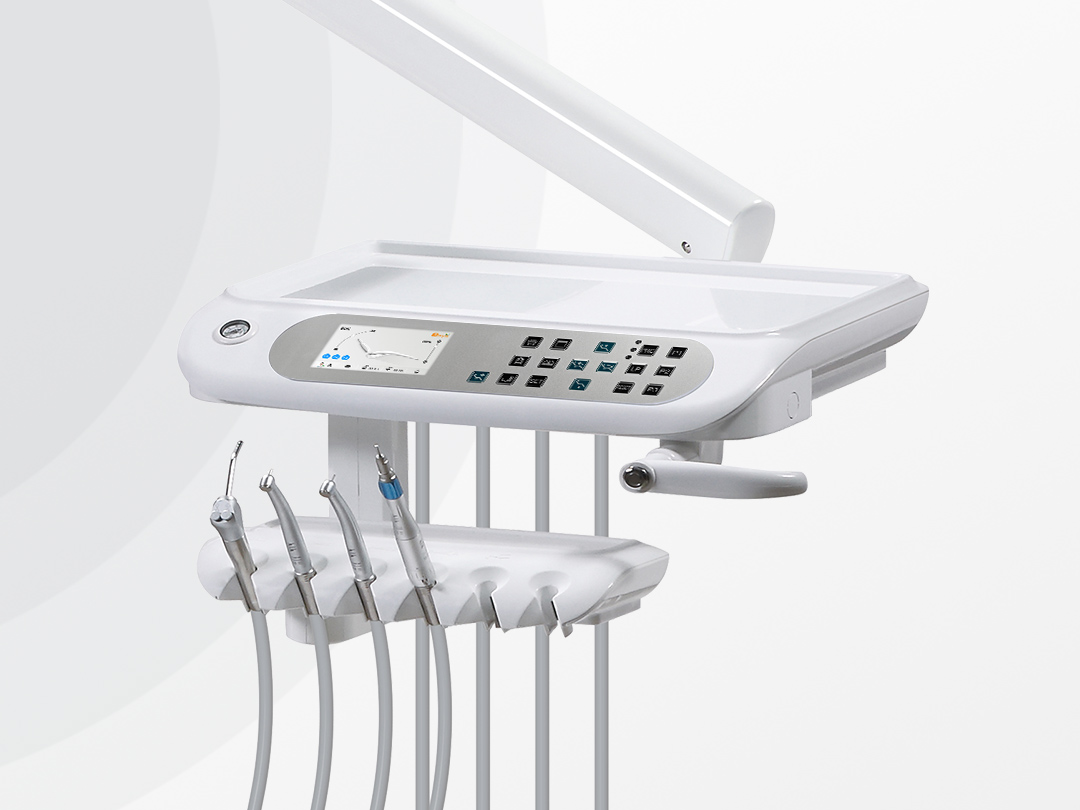
Trays, Covers, and Assistant-Side Components
Trays, delivery system covers, assistant-side panels, and cabinet surfaces receive frequent contact from operators and assistants. Buyers should inspect corners, seams, handles, tray surface finish, cover fit, and whether residue can collect around edges. A surface that looks attractive in a catalog may still be inconvenient if it has many hard-to-clean gaps or if covers are difficult to remove for service.
Ask whether trays, covers, handles, and assistant-side components are included in the standard configuration or optional. If a dealer will stock several models, also ask whether replacement covers and trays are shared across models or model-specific. This connects material review to the spare parts availability process.
Material Comparison Table
| Component | What to inspect | Buyer question |
|---|---|---|
| Frame and base | Visible structure, coating appearance, joint fit, cover fit, and service access. | Can the supplier explain the structural design and provide model-specific details? |
| Upholstery | Seams, edges, cushion finish, texture, color, and signs of cracking or looseness. | What cleaning instructions and replacement options are available? |
| Spittoon or bowl | Surface finish, removability, drain access, splash area, and hidden corners. | What parts are removable or replaceable, and what cleaning guidance is provided? |
| Tubing and hoses | Routing, kinks, connector access, labels, and replacement path. | Can the supplier identify replacement hoses and utility requirements? |
| Controls | Button surface, labels, cable routing, response, and cleanability. | Which control version is included, and are replacement controls available? |
| Trays and covers | Corners, seams, handle surfaces, fit, and areas where residue may collect. | Are tray and cover parts standard, optional, or model-specific? |
Material Risk Checklist
Use this checklist when reviewing photos, a showroom unit, a sample unit, or a trial order. The goal is to identify material questions early, before the chair reaches daily clinical use.
| Risk area | What to look for | Evidence to request |
|---|---|---|
| Wear-prone upholstery | Loose seams, uneven finish, peeling, wrinkles, or unclear cleaning instructions. | Close-up photos, manual cleaning notes, and replacement-part information. |
| Hard-to-clean surfaces | Deep seams, tight corners, rough edges, or residue traps around trays and bowl area. | Detailed photos of contact surfaces and removable parts. |
| Hidden service access | Panels or tubing routes that look difficult for technicians to reach. | Service access photos, part diagram, or technician explanation. |
| Unclear control version | Different panel shown in photo, quote, and product page. | Configuration sheet and control option confirmation. |
| Unsupported material claims | Claims such as antibacterial, corrosion-proof, or chemical-resistant without documentation. | Model manual, supplier statement, or test document where available. |
Choose Materials by Use Case
A high-volume clinic may prioritize easy-clean surfaces, replacement upholstery, accessible controls, and fast service access. A distributor may prioritize parts consistency, replacement cover availability, and clear configuration names across models. A clinic in a humid or coastal area may ask more questions about visible coating, corrosion protection, and storage conditions, while still relying on written supplier confirmation rather than assumptions.
The right material choice is not always the most expensive-looking option. It is the option that fits the clinic’s procedures, cleaning workflow, service capacity, room conditions, and budget. Use product pages such as the dental chair unit category to narrow model choices, then ask for written material and configuration details through the contact page.
FAQ
What dental chair materials should buyers check first?
Start with the frame and base, upholstery, spittoon or bowl area, tubing, hoses, controls, trays, covers, and service access points. These areas affect cleaning, wear, comfort, and maintenance.
Is a ceramic bowl better than other spittoon materials?
Many buyers like smooth, easy-clean bowl surfaces, but the right choice depends on the model, cleaning workflow, removable parts, and supplier instructions. Ask for model-specific material details instead of assuming.
How can I judge upholstery quality before buying?
Review close-up photos, seams, edges, cushion finish, texture, and cleaning instructions. If possible, inspect a sample or trial unit and ask whether replacement upholstery is available for the same model.
Should I ask for exact material names?
You can ask, but do not rely on broad material names without documentation. For practical buying, confirm the cleaning instructions, replacement path, service access, and visible quality of the actual chair model.
How do materials affect after-sales service?
Materials affect which parts wear first, how easily surfaces can be cleaned, whether covers can be removed, and whether hoses, controls, upholstery, or trays can be identified and replaced after installation.
Need model-specific material details? Send your target model, clinic use case, and configuration questions through the Anya Medical contact page before comparing dental chair quotes.