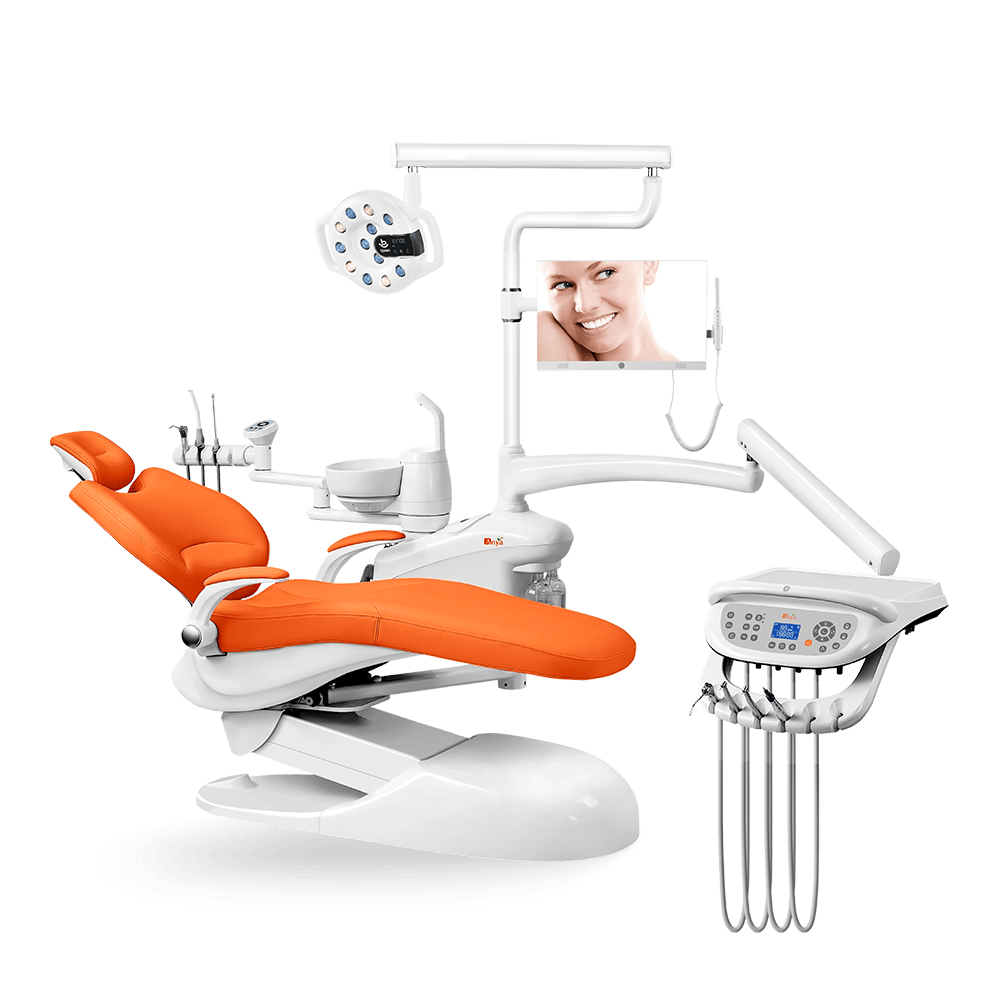
Infection control is a core requirement for dental clinics, and chair selection should support cleanable surfaces, waterline management, suction workflow, documented materials, and consistent room turnover. For dental practices, selecting infection-resistant chairs is a practical way to support hygiene protocols, staff workflow, and patient confidence.

Foshan Anya Medical Equipment Co., Ltd. manufactures dental chairs and related clinic equipment in Foshan, China. When reviewing models such as the AY-A8000 Smart Chair, buyers should ask for documented material specifications, cleaning instructions, waterline guidance, and service support before relying on any infection-control claim.
Regulatory and Documentation Questions for Infection Control
A. ADA and CDC’s Updated Material Requirements
When reviewing dental chair surfaces, ask suppliers whether materials and cleaning instructions address:
- Compatibility with the disinfectants and contact times used in the clinic.
- Surface smoothness, seams, upholstery quality, and areas where residue can collect.
- Documentation for any antimicrobial material claims used in high-touch zones.
Why This Matters for Clinics:
- Incomplete cleaning documentation, unclear material compatibility, or weak service records can create avoidable compliance and operational risk.
- Clinics reviewing Anya’s AY-A4800 Implant-Ready Chair should compare surface design, cleaning access, upholstery options, and documentation against their own infection-control protocol.
Material Innovations: Balancing Antimicrobial Efficacy and Durability
A. Copper Alloys: The Gold Standard in Pathogen Reduction

Copper alloys and other antimicrobial materials should be evaluated through published test methods, supplier documentation, compatible disinfectants, and the clinic’s actual cleaning routine.
Anya’s Engineering Breakthrough:
- The AY-A6000 Flexible Chair can be reviewed for armrest, control-panel, upholstery, and surface-cleaning design in high-touch areas.
- Material Review Checklist:
| Review Area | Antimicrobial Material | Standard Surface |
|---|---|---|
| Cleaning compatibility | Confirm disinfectants and contact time | Confirm manufacturer cleaning guidance |
| Maintenance planning | Check surface wear and replacement guidance | Check upholstery and component access |
| Patient confidence | Use visible hygiene workflow and documentation | Use consistent cleaning and staff communication |
Buyer note: compare materials using documented specifications and clinic-specific cleaning protocols.
B. Medical-Grade Polymers: The Lightweight Contender

For budget-conscious clinics, Anya’s AY-A3000 Cart-Based Chair should be reviewed by material type, disinfectant compatibility, surface access, and long-term service requirements.
Key Certifications:
- ISO 10993-5: Ask for current biocompatibility documentation where relevant.
- FDA 21 CFR 880.6320: Confirm which regulatory references apply to the specific model and market.
Smart Disinfection Systems: The Future of Autonomous Hygiene
A. UV-C vs. Nano-Silver: A Battle of Efficacy and Efficiency
Foshan Anya’s AY-A8000 Smart Chair resolves this with a hybrid disinfection system combining 270nm UV-C light and nano-silver ion emitters. Here’s how the technologies stack up:
| Technology | What to Verify | Workflow Question | Maintenance Question |
|---|---|---|---|
| UV-C support | Documented test method and safe use instructions | When can it run between patients? | How are bulbs or modules serviced? |
| Antimicrobial coating | Material documentation and disinfectant compatibility | Which surfaces are covered? | How is surface wear inspected? |
| Hybrid system | Supplier documentation and clinic protocol fit | How does it support room turnover? | Who maintains alerts and records? |
Source: 2025 Journal of Hospital Infection
Any automated disinfection or waterline feature should be reviewed against the supplier manual, clinic safety protocol, and local infection-control requirements. Ask how the system is activated, documented, maintained, and audited.
B. AI-Driven Risk Prediction: Stopping Outbreaks Before They Start
The AY-A8000 Smart Chair integrates infection-control monitoring support, a machine learning algorithm that analyzes:
- Real-time aerosol particle counts (0.3–10μm)
- Surface temperature/humidity data
- Historical disinfection compliance rates
Where automated monitoring is available, buyers should ask how the chair or accessory system supports:
- Preemptive UV-C cycles during procedural pauses
- Automatic waterline flushing with electrolyzed oxidizing water
- Staff alerts via the AnyaCare Clinic Management Platform
Dental practices should treat automated alerts as support for a documented infection-control program, not as a replacement for staff training, cleaning records, and routine waterline maintenance.
Modular Design: The Cost-Saving Revolution
A. The Economics of Replaceable Components

Modular design can simplify maintenance planning when replacement parts, service instructions, and warranty terms are clear. Anya’s AY-A3000 Cart-Based Chair can be reviewed through the following service questions:
| Component | What to Check | Service Question | Planning Value |
|---|---|---|---|
| Hydraulic system | Access, warranty, and replacement process | Can service be done locally? | Helps reduce downtime risk |
| Upholstery | Material, seams, and disinfectant compatibility | How are worn surfaces replaced? | Supports hygiene and appearance |
| Control panel | Cleaning access and part availability | How are faults diagnosed? | Supports daily usability |
Buyer note: use supplier documentation and local service inputs before estimating long-term maintenance costs.
For sustainability planning, clinics should ask about replaceable parts, service documentation, material records, and any local disposal requirements that apply to the equipment.
B. Customization Without Compromise
Clinics can now tailor chairs to specialty needs:
- Pediatric Modules: The AY-DCS001 Child Seat Cushion attaches in <2 minutes, with pressure-sensitive antimicrobial foam.
- Implantology Kits: The AY-A4800 Implant Chair supports 8-axis positioning for complex surgeries.
- Mobility Access: Ramp-compatible bases with 360° rotation for wheelchair transfers.
Global Compliance: Navigating 2025’s Regulatory Maze
A. Regional Certification Breakdown
| Region | Documentation to Review | Supplier Question | Buyer Action |
|---|---|---|---|
| USA | Model-specific certificates and manuals | Which documents apply to this product? | Confirm with local advisor or importer |
| EU | CE documentation and material records | Are declarations current and model-specific? | Match documents to invoice and labels |
| ASEAN | Market-specific import documentation | What does the distributor need before shipment? | Review before placing the order |
Clinics serving international patients must prioritize multi-certified chairs like the AY-A8000, which holds documented certification support, including Japan’s PMDA and Saudi Arabia’s SFDA.
B. Documentation Best Practices
- Digital Logs: Use Anya’s Cloud Compliance Tracker to auto-record:
- Disinfection cycles
- Component replacements
- Air/water quality tests
- Audit Kits: Store physical copies of:
- ISO 13485:2025 certificates
- Antimicrobial material or coating documentation where claimed
- CE Declaration of Conformity
Conclusion: Building a Future-Proof Practice
The 2025 infection control revolution isn’t about fear—it’s about strategic empowerment. By investing in chairs like Anya’s AY-A8000 Smart Chair, clinics gain:
- planned long-term maintenance via modular upgrades
- visible hygiene and comfort planning for visible safety measures
- Clear documentation for local compliance reviews
The right timing for an upgrade depends on the clinic’s chair condition, cleaning workflow, service history, patient volume, and documentation requirements.
Ready to Lead the 2025 Hygiene Revolution?
Explore Anya’s full range of next-gen dental chairs here or schedule a live demo to see pathogen control in action.